




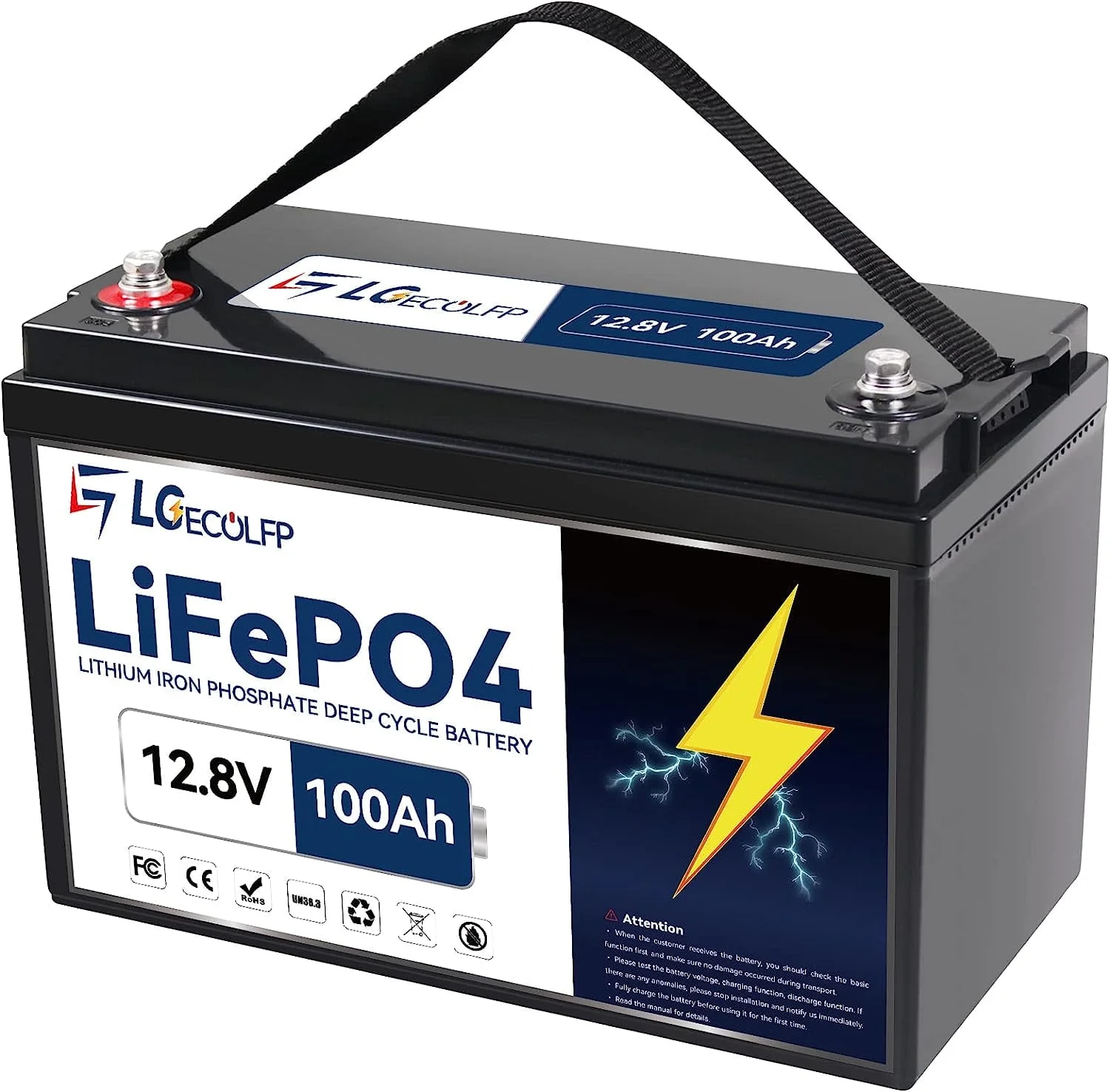
Vanonpower.com – A standard 100Ah LiFePO4 battery can typically deliver between 50 and 100 amps of continuous current, depending strictly on the internal Battery Management System (BMS) rating and the manufacturer’s cell chemistry specifications.
Understanding the discharge capacity of a LiFePO4 battery requires looking beyond just the amp-hour (Ah) rating. While the 100Ah capacity tells you how much energy the battery holds, the continuous discharge current tells you how fast that energy can be released safely. This distinction is vital for anyone powering high-draw appliances like inverters, motors, or heavy-duty power tools.
The Role of the Battery Management System (BMS)
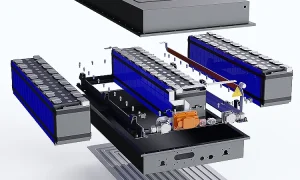
The most critical factor determining how many amps your battery can output is the BMS. The BMS is an electronic board installed inside the battery casing that acts as a gatekeeper. Even if the lithium cells themselves are capable of handling a high discharge rate, the BMS is programmed to shut down the power if the current exceeds a specific threshold to prevent overheating, short circuits, or permanent cell damage.
Most entry-level 100Ah LiFePO4 batteries come with a 50A or 100A BMS. If you attempt to pull 120 amps from a battery with a 100A BMS, the system will trigger a protection mode and cut off the power immediately. Always check the datasheet provided by the manufacturer to identify the “Continuous Discharge Current” rating rather than the “Peak Discharge Current,” which is often only sustainable for a few seconds.
Understanding C-Rating in LiFePO4 Batteries
The C-rating is a standardized way to measure the charge and discharge rates of a battery relative to its capacity. For a 100Ah battery, a 1C discharge rate means the battery can deliver 100 amps for one hour. A 0.5C rate means it can deliver 50 amps for two hours.
Many high-quality LiFePO4 batteries are rated at 1C, meaning they can safely handle a continuous 100-amp draw. However, pushing a battery to its maximum C-rating consistently can generate significant heat. Over time, excessive heat degrades the chemical integrity of the cells, leading to a reduced overall lifespan of the battery pack.
Comparison of Discharge Capabilities
Different battery configurations serve different purposes. The following table illustrates how internal BMS ratings dictate the performance limits of common 100Ah LiFePO4 setups.
| BMS Continuous Rating | Max Continuous Power (12V) | Best Use Case |
|---|---|---|
| 50 Amps | 600 Watts | LED lighting, small fans, phone charging |
| 100 Amps | 1200 Watts | Small inverters, coffee makers, microwaves |
| 200 Amps | 2400 Watts | High-draw appliances, induction stoves |
Risks of Exceeding Discharge Limits
Ignoring the continuous amp limit is one of the most common ways to ruin a battery. When you draw more current than the BMS is designed to handle, you risk several dangerous scenarios. First, the MOSFETs (the switches inside the BMS) can overheat and fail, potentially leaving the battery permanently “on” or permanently “off.”
Second, excessive current causes voltage sag. As the load increases, the internal resistance of the battery causes the output voltage to drop. If the voltage drops too low under a heavy load, your inverter may trigger a “Low Voltage Alarm” and shut down, even if the battery is technically charged. This is particularly common when trying to run a 2000W load on a battery with a 100A BMS.
How to Safely Assess Your System Load
Before connecting your equipment, you must calculate the total amperage your devices will consume. Follow these steps to ensure your battery can handle the load.
- List all devices you intend to power simultaneously and find their wattage ratings (usually printed on the back of the device).
- Sum the total wattage of all devices.
- Divide the total wattage by the battery voltage (e.g., 12V) to find the total amperage required.
- Add a 20 percent buffer to this number to account for inverter inefficiency and startup surges.
- Ensure the resulting figure is lower than the Continuous Discharge Current rating of your battery’s BMS.
Common Mistakes to Avoid
A frequent error is assuming that two 100Ah batteries connected in parallel will always double your discharge capability. While this is true for capacity, it is not always true for the BMS. If you connect two 100A-rated batteries in parallel, you can theoretically pull 200 amps. However, if the internal wiring or the BMS of one battery is slightly different, the current might not distribute perfectly evenly, causing one battery to shut down before the other.
Another mistake is failing to account for “inrush current.” Motors, such as those in refrigerators or water pumps, require a massive surge of power to start—sometimes three to five times their running wattage. Even if your battery can handle the running load, it might trip its BMS during the startup phase of a motor-driven appliance.
FAQ
Q: Can I use a 100Ah battery for a 2000W inverter?
A: Only if the battery has a 200A BMS. A standard 100A BMS will shut down immediately because a 2000W load at 12V requires roughly 167 amps, which exceeds the 100A limit.
Q: What happens if I exceed the continuous amp limit?
A: The BMS will detect the over-current condition and disconnect the battery to protect the cells from damage, causing your connected devices to lose power instantly.
Q: Does discharging at high amps reduce battery life?
A: Yes. High discharge rates create more internal heat. Consistent heat exposure speeds up chemical degradation, which will reduce the number of charge cycles the battery can provide over its lifetime.
In summary, always prioritize the BMS specification over the capacity rating when planning your power system. If your application requires high continuous power, look for batteries explicitly marketed with high-discharge BMS units or consider paralleling batteries to share the load. Proper planning prevents system shutdowns and ensures you get the full value out of your LiFePO4 investment.
Read also: What Is Cell Drift in LiFePO4 and How to Fix It
📷 Photo by walmart.com