






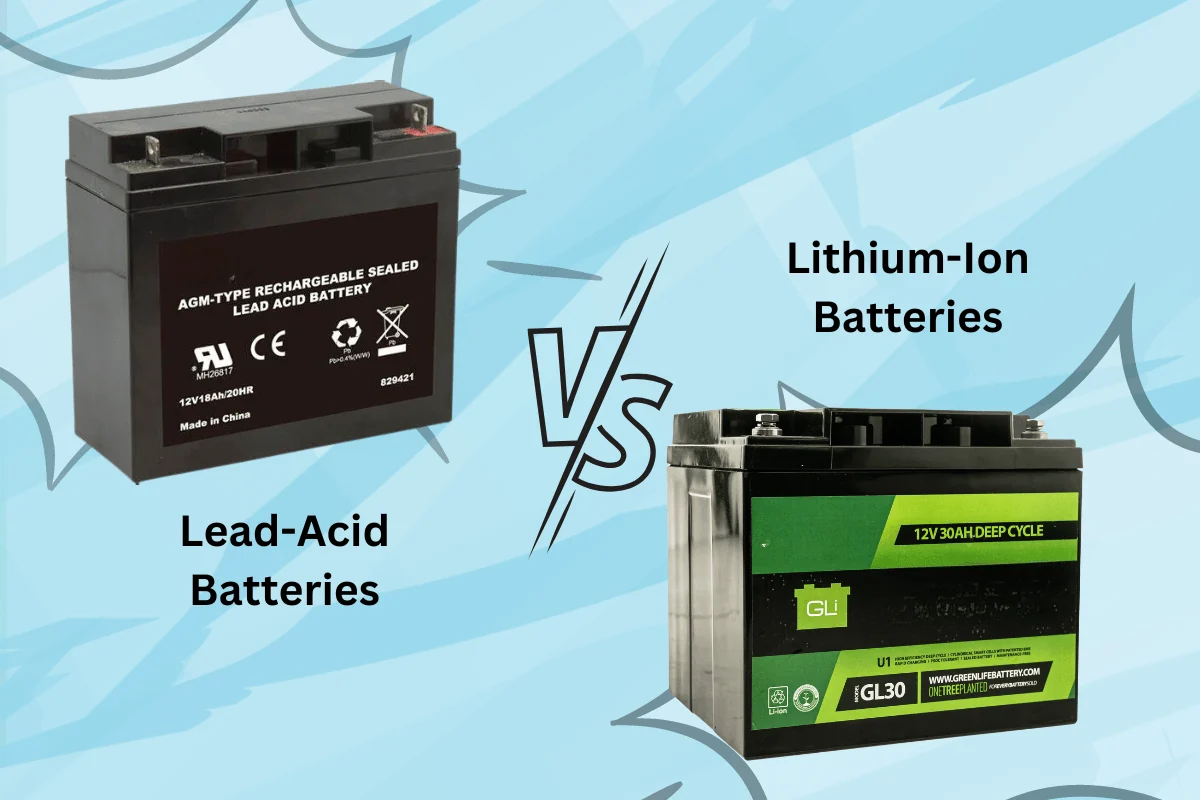
Vanonpower.com – Peukert’s Law calculates the effective capacity of a battery under varying discharge rates, revealing that lead-acid batteries lose significant capacity at high currents while lithium iron phosphate (LiFePO4) batteries maintain near-constant capacity regardless of load.
Understanding battery capacity is rarely as simple as reading the label. The Peukert effect describes the non-linear relationship between the discharge current and the time it takes to drain a battery. Named after German scientist W. Peukert, this principle is vital for off-grid power systems, electric vehicles, and marine applications where discharge rates fluctuate significantly.
The Mathematical Foundation of Peukert’s Law
The standard formula for Peukert’s Law is expressed as t = H / (I / IH)^k, where t is the time to discharge, H is the rated discharge time in hours, I is the actual discharge current, IH is the rated current, and k is the Peukert constant. This constant represents the battery’s efficiency at higher discharge rates.
For lead-acid batteries, the Peukert constant typically ranges between 1.1 and 1.3. A higher constant indicates a greater loss of capacity as the load increases. In contrast, lithium batteries are highly efficient, often boasting a Peukert constant between 1.01 and 1.05. This means that if you pull 100 amps from a 100Ah lithium battery, you get nearly the full 100Ah, whereas a lead-acid battery of the same rating might only provide 60-70Ah under that same stress.
Comparative Analysis of Battery Characteristics
| Feature | Lead-Acid Battery | Lithium (LiFePO4) |
|---|---|---|
| Peukert Constant (k) | 1.10 – 1.30 | 1.01 – 1.05 |
| Capacity Retention | Decreases significantly with high load | Stable across most discharge rates |
| Internal Resistance | High | Very Low |
| Efficiency | Lower (Energy lost as heat) | High (95%+ efficiency) |
Why Lead-Acid Batteries Fail Under Pressure
Lead-acid batteries suffer from internal chemical limitations. When you draw a heavy current, the chemical reaction cannot keep up with the demand at the surface of the battery plates. This creates a voltage drop, causing the battery to reach its “empty” cutoff voltage prematurely. It is not that the energy has disappeared; rather, it is trapped within the electrolyte, unable to move quickly enough to sustain the high load.
Lithium batteries, particularly LiFePO4, utilize a different chemistry that facilitates much faster ion transport between the cathode and anode. Because they have very low internal resistance, they do not suffer from the same voltage sag as lead-acid counterparts. This makes them far superior for high-draw appliances like microwaves, induction cooktops, or heavy-duty power tools.
Read also: Upgrading from Lead Acid to LiFePO4: Complete Conversion Checklist
Practical Steps to Calculate Capacity for Your System
To determine how long your system will last, follow these steps to apply the Peukert calculation to your specific setup:
- Identify your battery’s Peukert constant (found in the manufacturer’s datasheet; if unavailable, use 1.2 for lead-acid or 1.02 for lithium).
- Determine the rated capacity (Ah) and the time (H) at which it was rated (usually 20 hours).
- Calculate the rated current (IH) by dividing the capacity (Ah) by the rated time (H).
- Define your target load current (I) in amperes.
- Apply the formula: t = H * (IH / I)^k. The result (t) is the actual time in hours your battery will last under that specific load.
Common Mistakes and Risks
One of the most frequent errors in system design is assuming that a 100Ah battery will always provide 100Ah of energy. Designers often overlook the discharge rate, leading to system shutdowns when peak loads are applied. If you are running an inverter, always calculate the current based on the AC wattage divided by the battery voltage, accounting for the inverter’s efficiency loss.
Another risk is ignoring temperature. Peukert’s Law assumes standard room temperature (25 degrees Celsius). Cold temperatures exacerbate the Peukert effect in lead-acid batteries, effectively increasing the internal resistance and making the capacity drop even more drastically than the calculation suggests. Lithium batteries are also sensitive to extreme cold, but their primary issue is charging in freezing temperatures, not necessarily the discharge capacity drop associated with the Peukert effect.
Optimizing System Longevity
To maximize the life of your battery bank, try to keep your discharge currents low. Even with lithium, drawing a constant, high-amperage current creates heat, which degrades the battery chemistry over time. If your calculated Peukert value shows that your battery will be depleted in less than one hour, you are likely putting too much stress on the system. Consider increasing your battery bank size to distribute the load across more cells, thereby lowering the current draw per cell and extending the total cycle life.
Q: Does Peukert’s Law apply to all battery types?
A: It applies theoretically to all, but it is most relevant to lead-acid batteries. Lithium batteries are so efficient that the Peukert effect is negligible in most practical applications.
Q: Why do my lights dim when I turn on a heavy appliance?
A: This is caused by voltage sag resulting from the Peukert effect and high internal resistance. The battery cannot deliver the required power instantly, causing the voltage to drop under the heavy load.
Q: Can I use the same Peukert constant for all lead-acid batteries?
A: No. AGM, Gel, and Flooded batteries have different internal structures that result in slightly different Peukert constants. Always check the specific manufacturer documentation for accurate results.
By understanding and applying these calculations, you move from guesswork to precision engineering. Whether you are sizing a battery bank for a campervan or a backup power station for your home, Peukert’s Law provides the data necessary to ensure your system performs exactly as expected when you need it most.
📷 Photo by energytheory.com