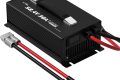


Vanonpower.com – MPPT efficiency is calculated by dividing the output power delivered to the battery by the input power received from the solar array, typically resulting in a performance rating between 94% and 99% for modern controllers. This conversion process ensures that excess voltage from solar panels is transformed into usable charging current, maximizing the energy harvest regardless of weather conditions.
Understanding the Core Mechanism
Maximum Power Point Tracking (MPPT) technology functions as a dynamic DC-to-DC converter. Unlike traditional PWM controllers that force solar panels to operate at the battery voltage, MPPT allows panels to operate at their peak power voltage (Vmp). By adjusting its input impedance, the controller matches the panel output to the battery requirements, effectively trading high voltage for higher amperage.
The efficiency of this process is not static; it fluctuates based on the temperature of the panels, the intensity of sunlight, and the state of charge of the battery. When the battery is nearly full, the controller may throttle the input to prevent overcharging, which can lead to a temporary drop in calculated conversion efficiency. Understanding these variables is essential for designing a system that minimizes energy loss.
The Mathematical Formula for Efficiency
To calculate the efficiency of your specific MPPT controller, you must measure the power entering and leaving the unit simultaneously. Power is defined as Voltage multiplied by Current (P = V x I). Therefore, you need two multimeters or a shunt-based power monitor to capture accurate data at the same time.
The formula is: Efficiency (%) = (Output Power / Input Power) x 100. If your panels are providing 200 Watts and your battery is receiving 192 Watts, your efficiency is 96%. It is important to note that the small percentage of energy lost during this conversion is dissipated as heat, which is why high-quality controllers often feature large aluminum heatsinks.
Comparison of Efficiency Factors
| Factor | Impact on Efficiency | Mitigation Strategy |
|---|---|---|
| High Input Voltage | Increases conversion stress | Keep array voltage within controller limits |
| Extreme Heat | Lowers panel output | Ensure proper airflow for solar panels |
| Cable Resistance | Causes voltage drop | Use thicker gauge copper wiring |
| Controller Quality | Affects tracking speed | Choose reputable, high-spec hardware |
Step-by-Step Guide to Calculating Real-World Efficiency
Follow these steps to determine how much power is actually reaching your battery bank during peak sunlight hours:
- Ensure the solar array is under direct, unobstructed sunlight to avoid fluctuating readings.
- Connect a DC clamp meter to the positive wire coming from the solar panels to measure Input Current (Amps).
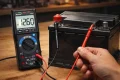
- Use a multimeter to measure the Input Voltage (Volts) at the controller’s input terminals. Multiply these two numbers to get Total Input Power.
- Connect a second meter to the output terminals leading to the battery bank to measure Output Current and Output Voltage. Multiply these to get Total Output Power.
- Divide the Output Power by the Input Power and multiply by 100 to find the current efficiency percentage.
Common Pitfalls and Efficiency Killers
One of the most frequent mistakes users make is ignoring the voltage drop in the wiring between the panels and the controller. Even if the MPPT unit itself is 98% efficient, if you lose 5% of your power in thin, undersized cables before it even reaches the controller, your system-wide efficiency will suffer significantly. Always prioritize short, thick cable runs to keep resistance at a minimum.
Another issue is the “Tracking Speed.” In rapidly changing weather, such as scattered clouds, some lower-cost MPPT controllers struggle to re-calculate the Maximum Power Point quickly enough. This results in the system operating at a sub-optimal voltage for several seconds or minutes, leading to a cumulative loss in energy harvest that does not show up on a static efficiency test.
The Role of Battery State of Charge
It is vital to recognize that MPPT efficiency is often highest during the Bulk charging stage. As the battery reaches the Absorption and Float stages, the controller must limit the current to protect the battery chemistry. During these later stages, the controller may appear “inefficient” because it is intentionally restricting power flow, not because the internal electronics are performing poorly. Do not confuse battery management protocols with hardware conversion losses.
Frequently Asked Questions
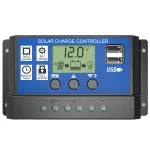
📷 Photo by desertcart.co.za
Q: Does a higher voltage array always mean better MPPT efficiency?
A: Not necessarily. While MPPT excels at stepping down high voltage, the conversion process generates more heat as the voltage differential increases. Operating the array at a voltage closer to the battery bank voltage often results in slightly higher conversion efficiency.
Q: Why does my controller get hot to the touch?
A: Heat is the primary byproduct of the conversion process. If your controller is 95% efficient, 5% of the incoming solar power is converted into thermal energy. This is normal, but ensure the unit has adequate ventilation to prevent thermal throttling.
Q: Can I use an MPPT controller with a small solar panel?
A: Yes, but keep in mind that the controller has its own internal power consumption (quiescent current). If the panel is too small, a significant portion of the harvested energy may be consumed just to power the controller’s display and internal logic, resulting in very low net efficiency.
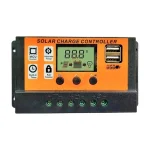
📷 Photo by walmart.com