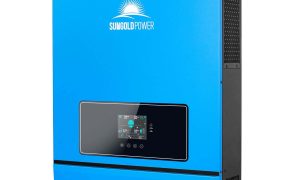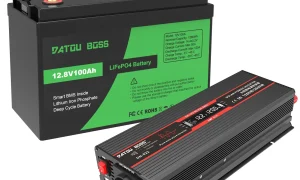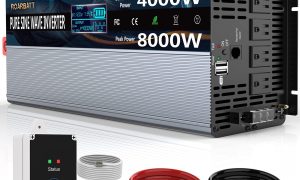



Vanonpower.com – Inverter surge capacity, also known as peak or starting wattage, provides the essential temporary power burst required to overcome the high initial resistance of inductive loads like motors, compressors, and pumps. Without this specific capability, an inverter would trigger an immediate overload shutdown the moment these devices attempt to start.
Understanding Inductive Loads and Inrush Current
To grasp why surge capacity is critical, one must distinguish between resistive and inductive loads. Resistive loads, such as incandescent light bulbs or heating elements, draw a steady amount of power from the moment they are turned on. Their operation is linear and predictable, meaning your inverter only needs to match their continuous power rating.
Inductive loads operate differently. Devices containing electric motors, such as refrigerators, air conditioners, power tools, and water pumps, require a massive surge of current—often three to seven times their running wattage—to overcome inertia and reach operational speed. This phenomenon is known as “inrush current.” If your inverter cannot handle this momentary spike, the internal circuitry detects an overload and cuts power to protect the unit from thermal damage.
The Mechanics of Surge Capacity
Surge capacity is not meant for sustained use; it is a temporary ability designed to last only for a few milliseconds to several seconds. High-quality inverters are engineered with robust capacitors and transformer designs that can discharge a large amount of energy instantaneously. This allows the motor in your tool or appliance to spin up to its required RPM before the power draw settles down to the device’s continuous running wattage.
When selecting an inverter, users often make the mistake of looking only at the continuous rating. If you have a 1,000-watt continuous inverter but your refrigerator requires 2,000 watts to start its compressor, the inverter will fail every time the cooling cycle begins. Always evaluate the “Starting Watts” or “Surge Rating” listed on the appliance’s nameplate versus the inverter’s peak capacity.
Common Appliances and Their Power Requirements
The following table provides a general reference for how surge requirements vary across common household and industrial equipment. Keep in mind that these are estimates, and the specific manufacturer’s data should always take precedence.
| Appliance Type | Running Watts (Approx.) | Starting/Surge Watts (Approx.) |
|---|---|---|
| Laptop Charger | 65W | 65W |
| Standard Refrigerator | 200W | 1,000W – 1,200W |
| Sump Pump (1/2 HP) | 800W | 2,000W – 2,500W |
| Circular Saw | 1,200W | 2,400W – 3,000W |
| LED Lighting | 10W | 10W |
Steps to Calculate Your Inverter Needs
📷 Photo by amazon.com
Calculating the correct inverter size requires a methodical approach to ensure you do not undersize your system. Follow these steps to determine the minimum surge capacity required for your setup:
- Identify the “Running Watts” of every device you plan to power simultaneously.
- Locate the “Starting Watts” or “Peak Watts” for any device containing a motor or compressor.
- Sum the running watts of all devices that will be on at the same time.
- Identify the single device with the highest starting wattage requirement.
- Add that highest starting wattage to the sum of all other devices’ running wattages to get your total peak power requirement.
- Choose an inverter that offers a continuous rating capable of handling the sum from step 3 and a surge rating that meets or exceeds the total from step 5.
Risks of Ignoring Surge Capacity
Ignoring the surge requirements of your equipment carries significant risks. The most common outcome is the “nuisance trip,” where the inverter shuts down repeatedly, causing frustration and potential data loss if you are running sensitive electronics. More importantly, frequent overloading can stress the inverter’s internal components, leading to premature failure of the capacitors or the MOSFETs (Metal-Oxide-Semiconductor Field-Effect Transistors).
In some cases, using an undersized inverter can cause a voltage drop. When the motor tries to draw current that the inverter cannot provide, the voltage levels may sag significantly. This low-voltage condition can cause the motor to overheat, potentially burning out the windings inside the appliance. This effectively turns a simple power issue into a costly equipment replacement problem.
Tips for Managing Peak Loads
If you find that your equipment’s starting requirements exceed your current inverter’s capabilities, you do not necessarily need to replace the entire system immediately. You can stagger the startup of your devices. For example, if you have multiple motors, turn them on one by one rather than all at once. This ensures that only one device is drawing its surge current at any given moment, keeping the total load within the inverter’s peak limit.
Additionally, consider the quality of the inverter. Pure sine wave inverters generally handle inductive loads much more efficiently than modified sine wave units. The cleaner power output helps motors run cooler and quieter, which reduces the overall strain on the electrical system.
FAQ
📷 Photo by amazon.com
Q: Does every appliance have a surge rating?
A: No. Only appliances with inductive components, such as motors, compressors, and transformers, exhibit high surge requirements. Purely resistive loads like heaters and incandescent lights do not have a surge rating.
Q: Can I use a larger inverter than my battery bank can support?
A: While you can use a larger inverter, you must ensure your battery bank has a high enough “C-rating” or discharge capability to provide the surge current. A large inverter is useless if the batteries cannot deliver the required amperage to reach that peak power.
Q: Why does my inverter shut down even though the appliance is within the continuous power limit?
A: This is almost always due to the inrush current spike exceeding the inverter’s surge capacity. Even if the device runs at 500 watts, its 2,000-watt startup spike can trigger an immediate protective shutdown if the inverter’s peak rating is too low.
📷 Photo by amazon.com