



Vanonpower.com – To calculate amp hours (Ah) from watt hours (Wh), simply divide the total watt hours by the nominal voltage of the battery system (Ah = Wh / V). This formula provides the total capacity available in your battery pack under ideal conditions.
Understanding the relationship between power, voltage, and capacity is essential for anyone managing off-grid solar systems, electric vehicle batteries, or portable power stations. While watt hours represent the total energy capacity, amp hours define how much charge a battery can deliver over a specific period. Knowing how to convert these values allows you to determine if a battery bank can support your electrical appliances for the required duration.
The Fundamental Formula Explained
The calculation relies on the basic electrical power law. Watt hours are calculated by multiplying amp hours by voltage. Therefore, to isolate amp hours, you perform the inverse operation. The accuracy of this calculation depends entirely on using the correct nominal voltage of the battery, which is usually printed on the casing or found in the manufacturer’s specification sheet.
For example, if you have a 1200Wh battery rated at 12V, the calculation is 1200 divided by 12, resulting in 100Ah. This means the battery can theoretically provide 100 amps for one hour, or 1 amp for 100 hours. However, real-world performance is rarely this linear due to discharge rates and efficiency losses.
Comparison of Battery Capacity Calculations
| System Type | Watt Hours (Wh) | Voltage (V) | Amp Hours (Ah) |
|---|---|---|---|
| Small Power Bank | 50Wh | 5V | 10Ah |
| Standard RV Battery | 1200Wh | 12V | 100Ah |
| Solar Home Storage | 5000Wh | 48V | 104.1Ah |
| Electric Bike Battery | 720Wh | 36V | 20Ah |
Practical Steps to Calculate Battery Capacity Needs
When planning an electrical setup, you should follow a systematic approach to ensure you do not undersize your battery bank. Follow these steps to determine your requirements:
- List every appliance you intend to run and estimate their total daily wattage consumption in watt-hours.
- Add a 20 percent buffer to your total watt-hour figure to account for inverter inefficiency and cable resistance.
- Identify the nominal voltage of your battery bank (e.g., 12V, 24V, or 48V).
- Divide your total watt-hours (plus the buffer) by the system voltage to arrive at the required amp-hour capacity.
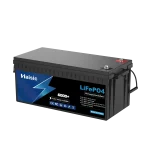
- Select a battery chemistry, such as Lithium Iron Phosphate (LiFePO4), which allows for deeper discharge without damaging the cells compared to traditional lead-acid batteries.
Common Pitfalls and Real-World Considerations
One of the most frequent errors users make is ignoring the depth of discharge (DoD). If you have a 100Ah lead-acid battery, you should not drain it to zero. Most lead-acid batteries have a recommended DoD of 50 percent, meaning you only have 50Ah of usable capacity. If you treat the full 100Ah as usable, you will significantly shorten the lifespan of the battery.
Another factor is the C-rating, which dictates how fast a battery can be safely discharged. A battery might have a high Ah rating, but if you pull power from it faster than the C-rating allows, the voltage will sag, and the effective watt-hours will decrease. Always check the manufacturer’s data sheet to ensure your load does not exceed the battery’s peak discharge capabilities.
Read also: What Happens When You Discharge a LiFePO4 Battery to 0 Percent?
Temperature and Efficiency Factors
Temperature plays a massive role in battery performance. Cold environments increase internal resistance, effectively lowering the usable amp-hours of your battery. Conversely, extreme heat can degrade the chemical components inside the battery, leading to permanent capacity loss over time. When calculating your needs, always plan for the worst-case scenario regarding ambient temperature.
📷 Photo by amazon.in
Furthermore, consider the efficiency of your inverter. Most modern pure sine wave inverters are about 85 to 90 percent efficient. This means that for every 100 watt-hours you draw from the battery, only 85 to 90 watt-hours actually reach your appliance. Factoring in this conversion loss is critical for long-term reliability.
📷 Photo by bethlehemforpeace.org
Frequently Asked Questions
Q: Why does my battery die faster than the calculated amp hours suggest?
A: This is usually due to the Peukert effect, where high discharge rates reduce the effective capacity of lead-acid batteries, or simply because you are exceeding the safe depth of discharge limit.
Q: Can I use the same formula for Lithium and Lead-Acid batteries?
A: Yes, the basic math (Ah = Wh / V) remains the same, but the usable capacity differs significantly because Lithium batteries can be safely discharged much deeper than Lead-Acid counterparts.
Q: Does the wire thickness affect my amp hour calculations?
A: While wire thickness does not change the battery’s capacity, undersized wires create voltage drop. This forces the battery to work harder and results in heat loss, effectively reducing the energy delivered to your devices.
By mastering these simple calculations, you gain better control over your energy independence. Always prioritize safety by using a battery management system (BMS) and appropriate fusing to protect your investment from short circuits or over-current conditions. Accurate planning prevents equipment failure and ensures your power system serves your needs reliably for years to come.
📷 Photo by ennologic.com