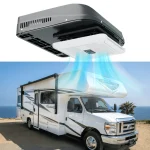
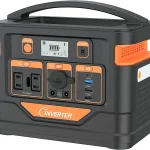
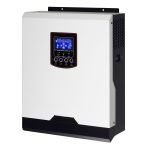


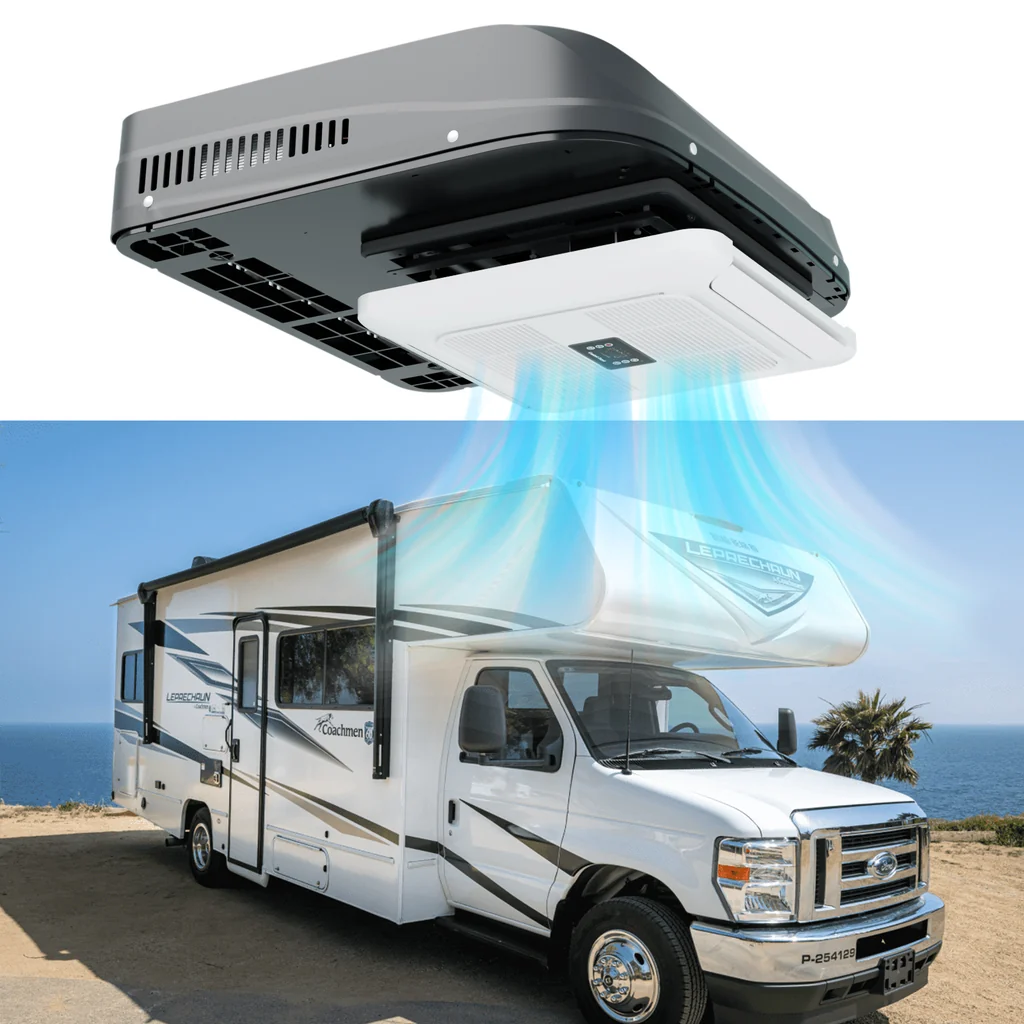
Vanonpower.com – To run a standard RV air conditioner, you generally need an inverter with at least 3,000 to 3,500 watts of surge capacity to handle the high initial power spike during compressor startup, followed by a continuous output of 1,500 to 2,000 watts.
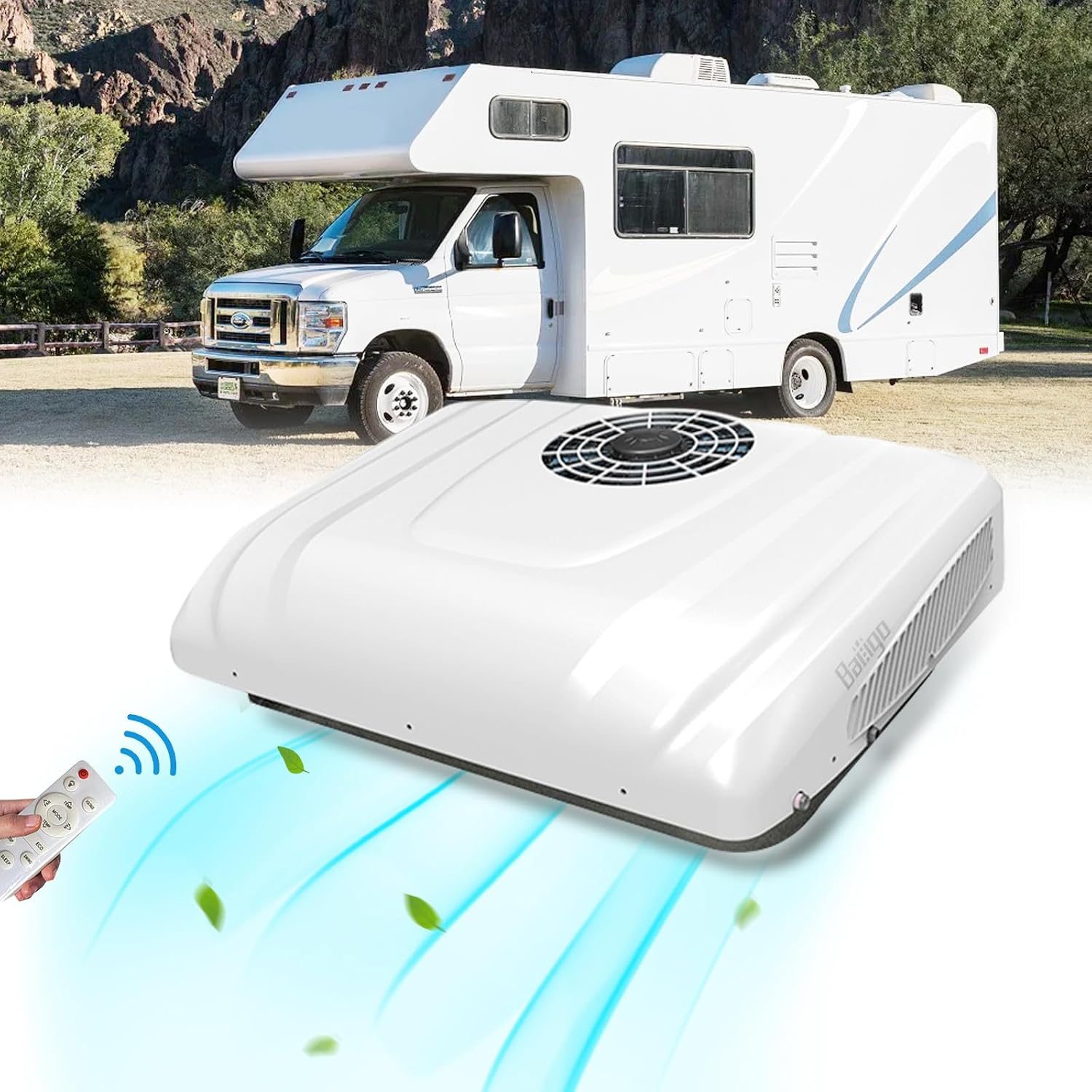
📷 Photo by amazon.com
Selecting the right inverter for an RV air conditioner is not just about the running watts listed on the unit’s nameplate. Most people make the mistake of buying an inverter based solely on the continuous power consumption, only to find that the unit shuts down immediately when the compressor kicks in. Air conditioners are inductive loads, meaning they require a massive surge of electricity—sometimes three to four times their operating wattage—for a few seconds to get the motor spinning.
Understanding Surge vs. Continuous Power
When you look at your RV air conditioner, you will see a label indicating the BTU (British Thermal Unit) rating. A 13,500 BTU unit is the industry standard for most travel trailers. While it may only draw 1,500 watts while running, the startup surge can easily hit 3,000 watts or more. If your inverter does not have the capacity to handle this brief spike, it will trigger an overload protection circuit and shut down, often leaving you with no cooling on a hot day.
For this reason, a 2,000-watt inverter is usually insufficient for most RV air conditioners unless you have installed a soft-start kit. If you are serious about off-grid cooling, a 3,000-watt pure sine wave inverter is the practical minimum. Pure sine wave is non-negotiable; modified sine wave inverters produce “choppy” power that can overheat the sensitive electronics and motors found in modern air conditioning units.
Factors Influencing Your Inverter Choice
Beyond the raw wattage, you must consider the battery bank capacity and the wiring gauge. Running an air conditioner through an inverter pulls a significant amount of amperage from your batteries. For a 12-volt battery system, pulling 1,500 watts of AC power translates to over 130 amps of DC draw, accounting for inverter efficiency losses. This is why lithium (LiFePO4) batteries are highly recommended over lead-acid or AGM batteries for this application, as they handle high-discharge rates much better.
| AC Size (BTU) | Avg. Running Watts | Required Inverter Surge | Recommended Inverter Size |
|---|---|---|---|
| 11,000 BTU | 1,200 W | 2,500 W | 2,500 W – 3,000 W |
| 13,500 BTU | 1,500 W | 3,000 W | 3,000 W – 3,500 W |
| 15,000 BTU | 1,700 W | 3,500 W | 3,500 W – 4,000 W |
The Role of Soft-Start Kits
If you are limited by space or budget and cannot install a massive 4,000-watt inverter, a soft-start kit is your best friend. A soft-start is a device installed inside the air conditioner’s electrical box that manages the compressor’s startup sequence. It ramps up the power gradually rather than demanding a massive surge all at once. Installing one of these can often allow a 13,500 BTU air conditioner to run on a 2,000-watt inverter comfortably, significantly reducing the stress on your electrical system.
Steps to Properly Power Your RV Air Conditioner
- Check the data plate on your air conditioner to identify the LRA (Locked Rotor Amps) and the running wattage.
- Assess your battery capacity to ensure it can support the high amperage draw for the duration you intend to run the AC.
- Install a soft-start capacitor or module if you want to use a smaller, more efficient inverter.
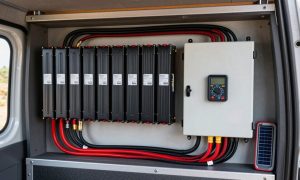
- Use heavy-gauge battery cables (2/0 AWG or larger) between your battery bank and the inverter to prevent voltage drop and overheating.
- Verify that your inverter is a pure sine wave model to protect the air conditioner’s control board from damage.
- Test the system under load while monitoring the battery voltage to ensure it does not drop below safe levels.
Common Mistakes to Avoid
One of the most frequent errors is assuming that all “3,000-watt” inverters are created equal. Many budget-friendly inverters advertise “peak” power that only lasts for a fraction of a second, which is useless for an air conditioner that needs several seconds to stabilize. Always look for the “surge” or “peak” rating that lasts for at least 5 to 10 seconds.
Another mistake is neglecting the heat generated by the inverter itself. When running an air conditioner, the inverter will get hot. If it is stored in an unventilated compartment, it will thermally shut down long before the batteries are empty. Always ensure the inverter has adequate airflow and is kept in a cool, dry environment.
Frequently Asked Questions
Q: Can I use a modified sine wave inverter to save money?
A: No. Modified sine wave power can cause the motor in your air conditioner to run hot, vibrate excessively, and eventually fail. It can also cause the control board to malfunction or emit a buzzing noise.
Q: How long will my batteries last while running the AC?
A: It depends on your battery bank size. A standard 100Ah 12V lithium battery will typically only power a 13,500 BTU AC for about 30 to 45 minutes before reaching a low-voltage cutoff. You generally need at least 300Ah to 400Ah of lithium capacity to run an AC for a few hours comfortably.
Q: Do I need a special transfer switch for the inverter?
A: Yes, an automatic transfer switch is highly recommended. It prevents the inverter from feeding power into the RV’s shore power cord while it is plugged into a pedestal, which could destroy your inverter and create a dangerous electrical hazard.
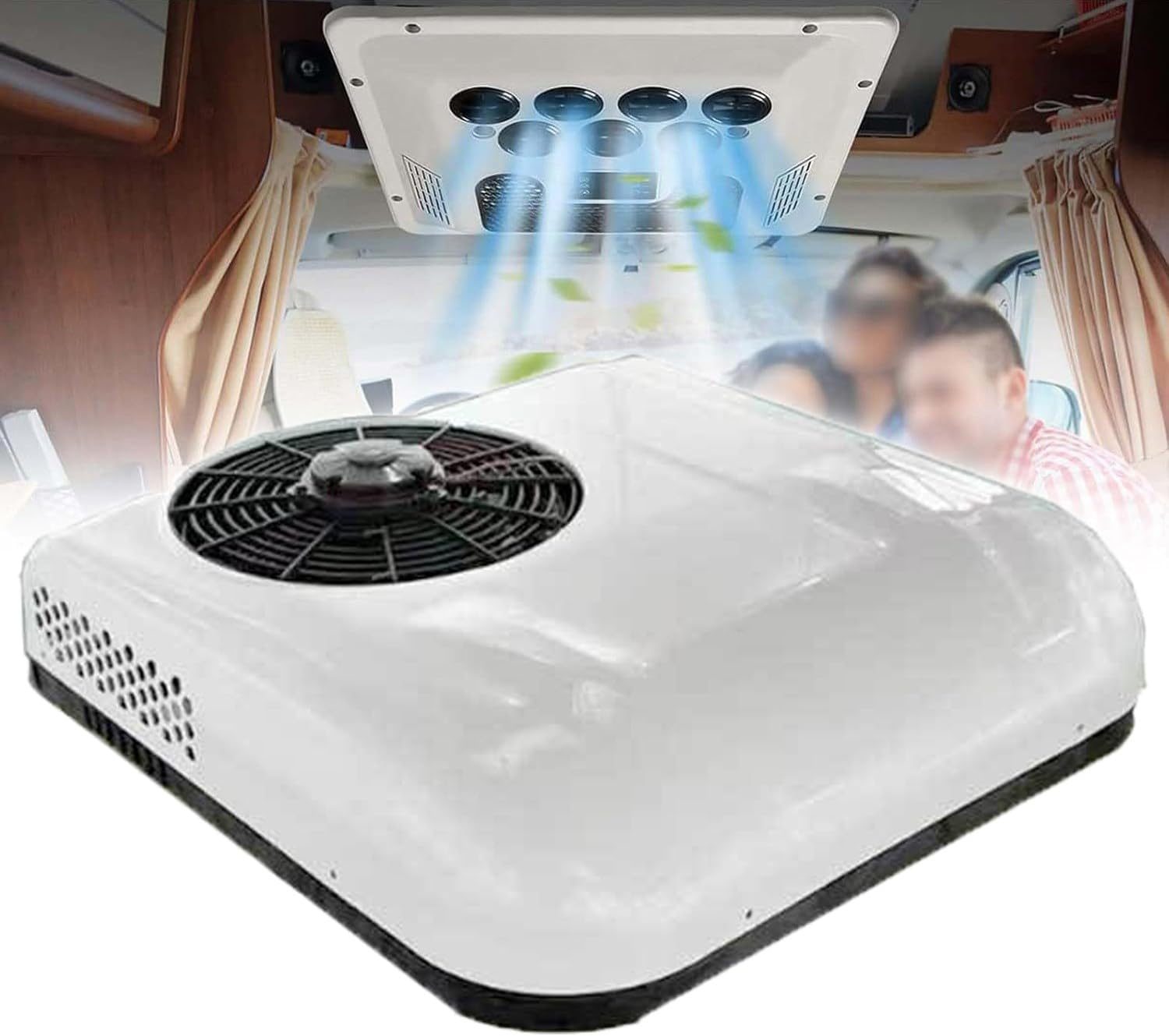
📷 Photo by amazon.com
By carefully calculating your startup needs and ensuring your battery bank is up to the task, you can enjoy the comfort of air conditioning regardless of whether you are parked at a campground or boondocking in the middle of nowhere. Always prioritize safety, use high-quality cabling, and consider a soft-start kit to keep your power requirements manageable.
📷 Photo by countrymodpro.com