



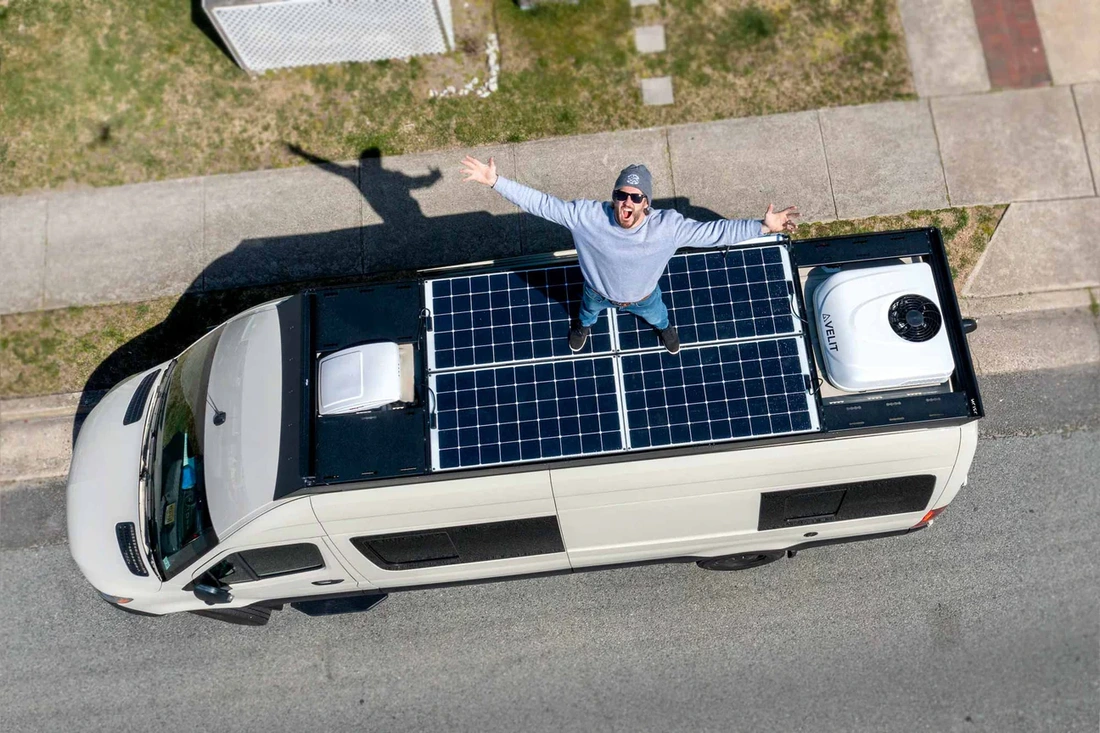
Vanonpower.com – Rigid solar panels generally last significantly longer than flexible panels on a van roof because their tempered glass and aluminum frame construction better resist thermal expansion, micro-cracking, and environmental degradation. While rigid panels typically offer a lifespan of 25 to 30 years, flexible panels often degrade within 3 to 7 years due to their vulnerability to heat buildup and structural fatigue.
The Structural Advantage of Rigid Solar Panels
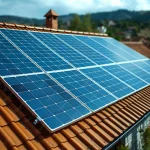
Rigid solar panels are the industry standard for a reason. They are constructed using a sandwich of tempered glass on the front, a durable polymer backing, and an aluminum frame that provides structural rigidity. This combination protects the internal silicon cells from mechanical stress and moisture ingress. When mounted on a van, the aluminum frame creates an air gap between the roof and the panel, which is crucial for cooling the cells. As solar panels become less efficient as they get hotter, this airflow significantly boosts performance and longevity.
The glass covering acts as a robust shield against debris, hail, and UV radiation. Even after two decades of exposure, high-quality rigid panels often retain 80 percent or more of their original power output. For van lifers who prioritize long-term reliability and don’t mind the added weight, rigid panels are the undisputed champions of durability.
The Weaknesses of Flexible Solar Panels
Flexible solar panels, often called thin-film or semi-flexible panels, are designed for portability and applications where weight is a critical constraint. They are typically made by laminating silicon cells between layers of plastic, such as ETFE or PET. Because they lack a rigid frame and glass protection, they are subject to different failure modes. The primary enemy of flexible panels is heat.
When glued directly to a van roof, flexible panels have no way to dissipate heat. They absorb the thermal energy of both the sun and the metal roof underneath. This constant thermal cycling causes the plastic layers to expand and contract at different rates than the silicon cells, eventually leading to micro-cracks in the circuitry. Furthermore, the plastic polymers used in these panels eventually yellow and become brittle under constant UV exposure, leading to delamination—where the layers peel apart and allow moisture to corrode the internal components.
Comparison Table: Rigid vs. Flexible Solar Panels
| Feature | Rigid Solar Panels | Flexible Solar Panels |
|---|---|---|
| Typical Lifespan | 25 – 30 Years | 3 – 7 Years |
| Weight | Heavy (Aluminum/Glass) | Lightweight (Plastic) |
| Heat Dissipation | Excellent (Air gap) | Poor (Direct contact) |
| Installation | Mounting brackets required | Adhesive/Glue |
| Cost | Lower per watt | Higher per watt |
Common Installation Mistakes
Even the most durable rigid panels can fail prematurely if installed incorrectly. A common mistake is failing to account for wind load. At highway speeds, the pressure exerted on panels can be immense. If the mounting brackets are not properly secured to the van’s structural ribs, the resulting vibration can cause the panel frames to crack or the mounting hardware to rip through the roof skin. Always use stainless steel hardware and ensure that sealant points are regularly inspected for leaks.
For those choosing flexible panels, the most frequent error is improper surface preparation. If the adhesive is applied to a dirty, oily, or uneven surface, air pockets will form beneath the panel. These air pockets act as insulators, creating extreme localized heat spots that will destroy the panel in a single summer. Always use a primer and ensure the roof surface is scrupulously clean before installation.
Step-by-Step Guide: Maximizing Your Solar System Lifespan
- Assess your roof space and weight capacity before choosing your panel type; rigid panels require a roof rack or sturdy mounting system.
- If choosing rigid panels, install them with at least a 1-inch air gap between the panel and the roof to facilitate convective cooling.
- Use high-quality, UV-resistant sealant (like Dicor or 3M VHB tape) for all roof penetrations to prevent water ingress, which is the leading cause of electrical shorts.
- Avoid walking on any panel, regardless of its rating; micro-cracks are often invisible to the naked eye but drastically reduce power output over time.
- Clean your panels periodically with water and a soft cloth to remove dust and bird droppings, which can create hot spots on the surface.
- Check your wiring connections annually for signs of corrosion or loose terminals, especially if you drive on rough, corrugated roads frequently.
The Role of Environmental Factors
Where you travel plays a massive role in how long your panels last. If you spend your time in temperate, coastal climates, the degradation of flexible panels is slower. However, if you are a desert dweller, the intense heat and high UV index will accelerate the chemical breakdown of the plastic polymers in flexible panels. Conversely, rigid panels are largely indifferent to these environmental stressors, making them the preferred choice for full-time travelers who move through varying climates.
FAQ
Q: Can I walk on my rigid solar panels?
A: Generally, no. While some rigid panels are marketed as “walkable,” most are not designed to support human weight. Stepping on them can cause invisible micro-cracks in the silicon cells, leading to a permanent drop in efficiency.
Q: Are there any high-end flexible panels worth buying?
A: Yes, panels using CIGS (Copper Indium Gallium Selenide) technology or high-quality ETFE coatings generally perform better and last longer than standard PET-based flexible panels, though they come at a significantly higher price point.
Q: Does the color of my van roof affect panel longevity?
A: Yes. A white roof reflects sunlight and stays cooler, which helps keep the underside of the solar panels cooler. A black or dark-colored roof will absorb significantly more heat, which can reduce the lifespan of your solar setup, especially if using flexible panels.
📷 Photo by custommarineproducts.com