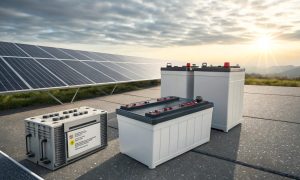



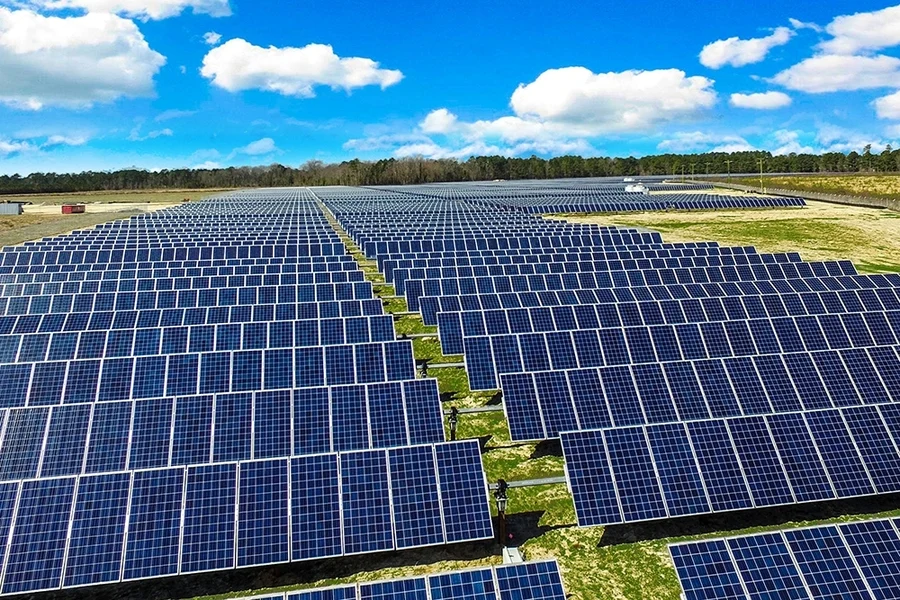
Vanonpower.com – A 300-watt solar array typically generates between 1,200 and 1,800 watt-hours of energy per day, which translates to approximately 100 to 150 Amp-hours (Ah) of power in a 12-volt battery system, depending on peak sun hours and system efficiency.
Calculating the daily Amp-hour (Ah) output of a solar setup is the cornerstone of off-grid power design. While a 300-watt panel system sounds straightforward, the reality of solar harvesting involves several environmental variables that dictate how much electricity actually reaches your battery bank. Understanding these variables ensures that your appliances remain powered during the night or periods of low sunlight.
The Mathematical Foundation
To determine the daily Amp-hour production, you must first calculate the total daily watt-hours and then convert that figure into Amp-hours based on your system voltage. The basic formula is: (Solar Panel Wattage x Peak Sun Hours x Efficiency Factor) / System Voltage = Daily Amp-hours.
Peak sun hours refer to the intensity of sunlight, not the total hours the sun is in the sky. For instance, a location might experience five hours of peak sunlight even if the sun is visible for twelve hours. Efficiency factors, such as heat buildup, wiring resistance, and charge controller losses, usually reduce the theoretical output by 15% to 20%.
Factors Influencing Daily Yield
Temperature plays a surprisingly significant role in solar efficiency. As solar panels heat up, their voltage drops, which decreases the total wattage produced. This is why panels in cooler, sunny climates often outperform those in hot, humid environments. Dust, bird droppings, and debris can also create localized shading, which disproportionately impacts the output of the entire array if the panels are wired in series.
The angle of the panels relative to the sun is another critical factor. Ideally, panels should be tilted at an angle equal to your latitude to maximize energy capture throughout the year. If the panels are mounted flat on a roof, you may lose 10% to 30% of your potential daily yield depending on the season.
Estimated Daily Output Based on Sunlight Exposure
| Peak Sun Hours | Total Watt-Hours (300W Panel) | 12V System (Ah Output) | 24V System (Ah Output) |
|---|---|---|---|
| 3 Hours | 900 Wh | 75 Ah | 37.5 Ah |
| 4 Hours | 1,200 Wh | 100 Ah | 50 Ah |
| 5 Hours | 1,500 Wh | 125 Ah | 62.5 Ah |
| 6 Hours | 1,800 Wh | 150 Ah | 75 Ah |
Step-by-Step Calculation Guide
Follow these steps to estimate the specific performance of your own 300-watt solar array:
- Identify your location’s average peak sun hours using a solar irradiance map or database provided by meteorological services.
- Multiply your solar panel wattage (300W) by the average peak sun hours to find the theoretical maximum watt-hours.
- Apply an efficiency factor of 0.85 to account for energy losses in the charge controller, cables, and battery charging process.
- Divide the resulting watt-hours by your battery bank voltage (e.g., 12V or 24V) to find the daily Amp-hour capacity.
- Subtract the depth of discharge (DoD) requirements to ensure you are not draining your batteries below their safe operating threshold.
Common Mistakes to Avoid
One of the most frequent errors users make is assuming their solar panels operate at peak efficiency throughout the entire day. Panels only hit their rated wattage under “Standard Test Conditions,” which rarely occur in real-world scenarios. Always plan for the lower end of your estimated range to avoid power shortages.
Another common mistake is neglecting the voltage drop in long wire runs. If your solar array is located far from your battery bank, the resistance in the cables will turn a portion of your generated electricity into heat. Use appropriately sized cables to ensure that the current generated by your 300-watt array actually reaches your batteries without significant loss.
Risks of Oversimplification
Relying solely on the manufacturer’s wattage rating without considering battery chemistry can lead to premature system failure. For example, lead-acid batteries should generally not be discharged below 50%. If your calculation shows you need 100Ah per day, you actually need a battery bank capacity of at least 200Ah to maintain a healthy lifespan for the batteries. Ignoring these limits will lead to sulfation in lead-acid batteries or accelerated degradation in lithium-ion banks.
Frequently Asked Questions
Q: Does the size of the battery bank change how much power the solar panels generate?
A: No, the solar panels generate power based on sunlight; the battery bank only determines how much of that power you can store for later use.
Q: Will my 300-watt panel produce 300 watts every hour it is sunny?
A: No, the 300-watt rating is the maximum output under perfect laboratory conditions; real-world output fluctuates constantly based on the sun’s angle, cloud cover, and panel temperature.
Q: Can I exceed 150 Ah per day with a 300-watt system?
A: Only in exceptional conditions, such as high-altitude environments with extremely cold temperatures and perfectly clear skies, which can occasionally cause panels to temporarily over-perform their rated wattage.
By accurately calculating your daily Amp-hour needs and accounting for real-world environmental losses, you can build a robust system that powers your needs reliably. Always prioritize a buffer in your calculations to account for consecutive cloudy days, ensuring your energy independence remains intact regardless of the weather.
📷 Photo by shieldenchannel.com