


Vanonpower.com – Isc stands for short-circuit current, representing the maximum current a solar panel can produce when its terminals are connected without a load, while Imp is the current at maximum power, indicating the actual current output when the panel is operating at its peak efficiency under standard test conditions.
Understanding these two metrics is essential for anyone designing a solar power system. Many beginners confuse the two, leading to sizing errors that can either damage components or cause significant power loss. While both represent current, they function in entirely different electrical states.
Defining Isc (Short-Circuit Current)
Short-circuit current (Isc) is the highest current that a solar panel can output. This value occurs when the positive and negative terminals of the panel are shorted together, meaning there is zero resistance and zero voltage across the terminals. In a practical sense, it is the absolute limit of current flow for that specific module.
Engineers use the Isc value primarily for safety and equipment sizing. When you select a charge controller, a fuse, or a circuit breaker, you must ensure they are rated to handle the Isc of your solar array. If your system experiences a fault, the current will spike toward this Isc level, and your protective devices must be robust enough to handle it without failing.
Defining Imp (Current at Maximum Power)
Current at maximum power (Imp) is the operating current when the solar panel is delivering its highest possible power output under Standard Test Conditions (STC). Unlike Isc, which is a theoretical maximum in a shorted state, Imp is the real-world value you expect to see when the panel is connected to a load, such as an inverter or a battery bank, operating at its optimal efficiency.
If you are calculating how much energy your system will generate on a sunny day, Imp is the figure you should use. It represents the “sweet spot” of the panel’s performance curve. When matching a solar panel to a charge controller or a micro-inverter, the system is designed to track this Imp value to maximize energy harvest.
The Relationship Between Current and Voltage
To understand why these values differ, you must visualize the solar panel’s I-V curve (Current-Voltage curve). The Isc exists at the far left of the curve where voltage is zero. As you increase the load resistance, the voltage rises, and the current remains relatively stable until it reaches the Maximum Power Point (MPP).
At the MPP, the product of current (Imp) and voltage (Vmp) is at its peak. Beyond this point, if you continue to increase the voltage, the current drops rapidly until it reaches the Open-Circuit Voltage (Voc) point, where the current becomes zero. This inverse relationship is why you cannot use Isc to calculate your actual daily power production.
Comparative Specifications
| Feature | Isc (Short-Circuit Current) | Imp (Current at Max Power) |
|---|---|---|
| Electrical State | Shorted terminals (zero resistance) | Connected to load (optimal resistance) |
| Purpose | Safety sizing and fuse selection | Performance calculation and power output |
| Magnitude | Higher than Imp | Lower than Isc |
| Voltage level | Zero voltage | Vmp (Maximum power voltage) |
Common Mistakes in Solar Sizing
A frequent error made by DIY solar installers is using Isc to calculate the daily energy capacity of their battery system. If you use Isc, you will overestimate the power production of your panels, leading to an undersized battery bank or an inverter that struggles to handle the load. Always use the Imp value for calculating daily watt-hour production.
Another dangerous mistake is ignoring Isc when choosing fuses. If your fuse is rated lower than the Isc of your panel array, the fuse will blow frequently during normal, high-intensity sunlight periods. Conversely, if the wire gauge is too thin to handle the Isc, the wire could overheat during a short-circuit event, posing a fire risk.
Steps to Determine Your System Needs
- Identify the Isc and Imp values printed on the back of your solar panel or found in the manufacturer’s datasheet.
- Multiply the Imp value by the number of panels in parallel to determine the total current the charge controller must handle.
- Ensure your charge controller’s maximum input current rating is higher than the calculated total Imp.
- Select a fuse for your array that is higher than the total Isc but lower than the maximum current rating of the solar cables you are using.
- Verify that the wire gauge is thick enough to handle the Isc without excessive voltage drop or heat buildup.
Environmental Factors Affecting Current
It is important to note that both Isc and Imp are measured under Standard Test Conditions, which involve an irradiance of 1000W/m² and a cell temperature of 25°C. In the real world, these values fluctuate. High temperatures generally cause the Imp to drop slightly, while high irradiance levels can cause the Isc to rise above the datasheet specifications.
Always incorporate a safety margin into your calculations. A common industry practice is to multiply the Isc by 1.25 when selecting overcurrent protection devices to account for potential variations in solar intensity and temperature-induced surges.
Q: Can I use Isc to determine if my solar panel is working properly?
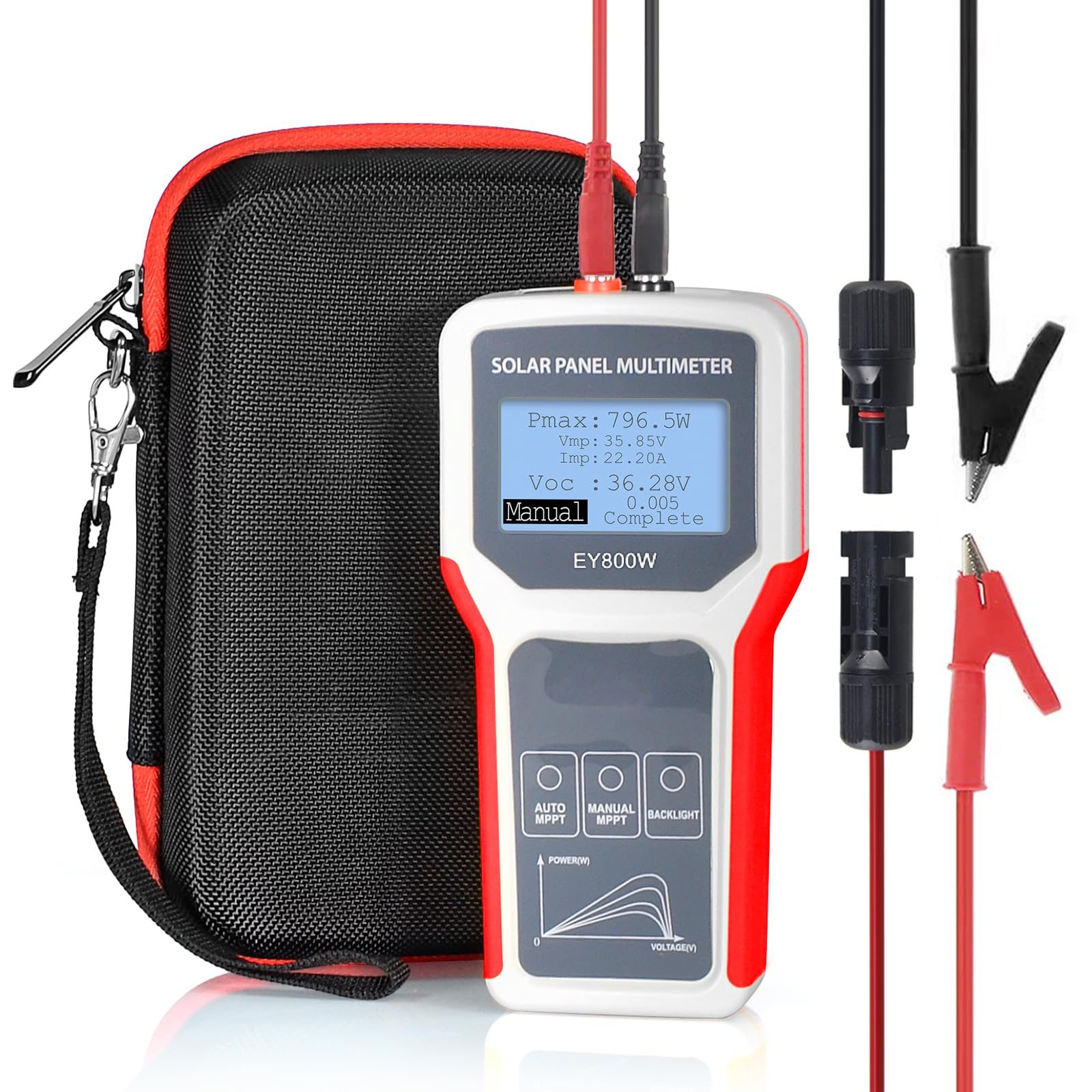
A: Yes, measuring the short-circuit current with a multimeter is an effective way to test if a panel is functional, provided the measurement is taken in full sunlight.
Q: Why does my charge controller list a maximum current that is lower than my panel’s Isc?
A: The controller’s maximum current rating usually refers to its output capacity to the battery; if the input Isc exceeds the controller’s safety limits, you risk permanent damage to the device.
Q: Does the Imp change if I connect panels in series?
A: When you connect panels in series, the Imp remains the same as that of a single panel, while the voltage (Vmp) adds up. The Isc also remains the same as a single panel in a series configuration.
In conclusion, while Isc and Imp are both critical metrics, they serve different masters. Isc is the guardian of your system’s safety, ensuring your components don’t melt down during a surge, while Imp is the metric that governs your system’s real-world power generation. Understanding the distinction between these two values is the hallmark of a well-designed, reliable, and safe solar installation.
📷 Photo by snapklik.com