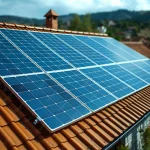


Vanonpower.com – Shading significantly reduces solar panel output in series configurations because the current is restricted to the level of the weakest shaded cell, whereas parallel configurations allow unshaded panels to continue operating at their full potential independently.
When designing a solar energy system, understanding how shadows interact with your array is critical for long-term performance. Many homeowners assume that a small shadow on one corner of a panel only affects that specific area, but the electrical architecture of the system dictates a much harsher reality. The way your panels are wired determines whether a stray tree branch or a chimney shadow cripples your entire system or merely impacts a small fraction of your total power.
The Impact of Series Wiring
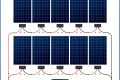
In a series configuration, solar panels are connected like a string of old-fashioned holiday lights. The positive terminal of one panel connects to the negative terminal of the next. In this setup, the voltage adds up, but the current is limited by the panel producing the least amount of electricity. This is known as the “weakest link” effect.
If even a small portion of one panel in a series string is shaded, the internal bypass diodes may activate to protect the cells from overheating. This essentially bypasses the shaded segment, but it drops the string voltage. If the shading is heavy enough, the entire string’s output can plummet. Because the current must flow through every panel in the sequence, a single shaded panel effectively acts as a bottleneck for the entire array.
The Parallel Advantage
Parallel wiring operates differently. In this configuration, all positive terminals are connected together, and all negative terminals are connected together. Each panel functions as an independent unit. If one panel is shaded, it will produce less power, but it does not restrict the current flow of the neighboring panels.
This setup is generally more resilient to intermittent shading, such as clouds moving across the sky or shadows from nearby structures. However, parallel wiring requires thicker cabling to handle the higher combined current and often necessitates more complex electrical management to maintain consistent voltage levels across the system.
Comparison of Shading Sensitivity
The following table outlines the primary differences between series and parallel configurations regarding shading performance and system requirements.
| Feature | Series Connection | Parallel Connection |
|---|---|---|
| Shading Impact | High (bottleneck effect) | Low (independent operation) |
| Wiring Complexity | Simple (lower current) | Higher (thicker cables needed) |
| Voltage Levels | High (additive) | Low (constant) |
| Best Use Case | Unobstructed, large roof areas | Areas with frequent, partial shade |
Common Causes of Shading
Shading is not always obvious. While large objects like chimneys or trees are easy to spot, other factors can cause significant power loss. Dust, bird droppings, and leaf debris can create localized shading that triggers bypass diodes. Even the tilt of the panel can cause self-shading if the rows are placed too close together, particularly during winter months when the sun sits lower in the sky.
Another often overlooked factor is the “edge effect.” When a shadow moves across a panel, it doesn’t just block sunlight; it changes the electrical characteristics of the cells. This can lead to hot spots, where the energy that cannot be converted into electricity is instead dissipated as heat. Over time, these hot spots can permanently damage the solar cells, reducing the lifespan of the panel.
Mitigation Strategies for Shaded Environments
If you find that your installation site has unavoidable shading, you do not necessarily have to abandon solar power. Modern technology provides several ways to mitigate the losses associated with series wiring.
One of the most effective solutions is the use of Module Level Power Electronics (MLPE), such as microinverters or DC power optimizers. These devices are attached to each individual panel. They allow each unit to operate at its maximum power point (MPPT) regardless of what the adjacent panels are doing. By decoupling the panels, you essentially gain the benefits of parallel wiring while maintaining the efficient high-voltage transmission of a series-wired system.
Steps to Minimize Shading Losses
- Conduct a site survey during different times of the day and different seasons to map out shadow patterns.
- Clear any encroaching vegetation or branches that cast consistent shadows on the roof surface.
- If installing in series, consider using panels with multiple internal bypass diodes to minimize the impact of partial shading.
- Evaluate the cost-benefit of installing power optimizers if your roof has complex geometry or frequent obstructions.
- Clean your panels regularly to prevent dust or organic matter from creating “micro-shading” zones.
Risks of Ignoring Shading
Ignoring shade issues during the design phase can lead to a significant drop in Return on Investment (ROI). If a system is designed for a series string and later experiences unexpected shading, the annual energy yield could be 20% to 40% lower than predicted. Furthermore, the constant activation of bypass diodes in a shaded series string can accelerate the degradation of the panels, leading to premature failure of the equipment.
Common Mistakes to Avoid
A frequent error is placing panels in a “string” that spans across different roof planes or areas with drastically different shading profiles. For example, connecting panels on a sunny south-facing roof in series with panels on a partially shaded west-facing roof is a recipe for efficiency loss. Always group panels with similar solar exposure into the same string to ensure the system operates at peak efficiency.
Additionally, avoid the “set it and forget it” mentality. Even if you have a high-quality system, monitoring your output via an app or web portal is essential. If you notice a sudden drop in production that doesn’t correlate with weather patterns, it is a sign that a new shadow source—such as a growing tree—has begun to affect your system’s performance.
FAQ
Q: Does a cloudy day count as shading?
A: Diffuse light from clouds is not the same as shading. While total power output will be lower on a cloudy day, the light is usually distributed evenly across the array, allowing series-connected systems to function normally without the dramatic drops caused by hard shadows.
Q: Can I mix series and parallel wiring in one system?
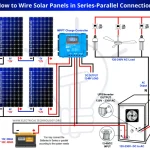
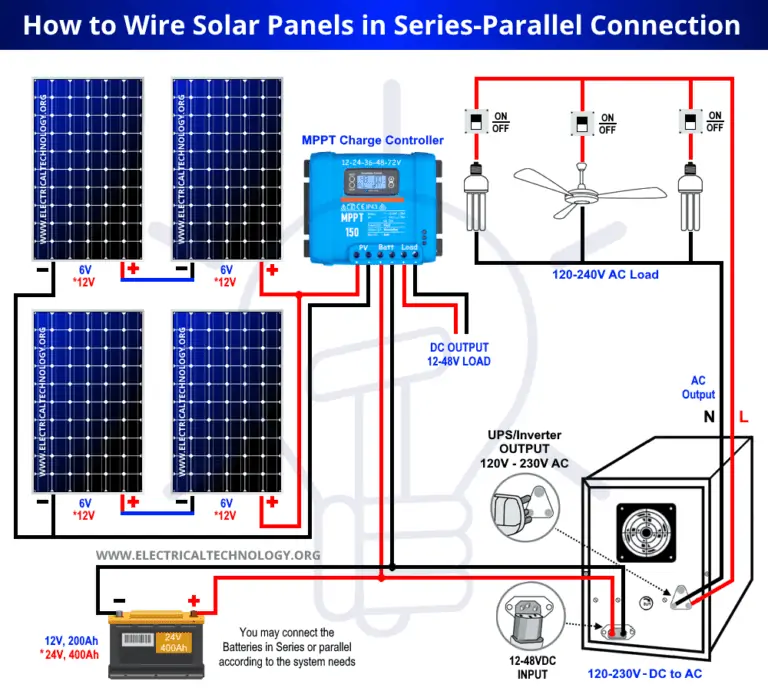
A: Yes, this is known as a series-parallel or “matrix” configuration. It is frequently used in larger arrays to achieve the optimal voltage for the inverter while keeping the current within manageable limits, and it offers a compromise in shading resilience.
Q: Is it worth upgrading to microinverters just to fix shading?
A: If your shading is severe and persistent, the increase in energy production typically pays for the cost of microinverters over the life of the system. However, if the shading is minor or only occurs for a few minutes a day, the cost might not be justified.
Ultimately, the goal is to ensure that your solar array is designed to match the specific conditions of your roof. By understanding the electrical limitations of series versus parallel wiring, you can make informed decisions that maximize your energy independence and protect your investment for years to come.
📷 Photo by moowiring.com