



Vanonpower.com – Reverse current flow in solar arrays at night occurs primarily when faulty or absent blocking diodes allow the battery bank to discharge back through the solar panels, treating the inactive modules as a load rather than a source. This phenomenon effectively turns your solar array into a power drain, potentially damaging equipment and depleting stored energy.
Understanding the Mechanism of Reverse Current
During daylight hours, solar panels generate electricity through the photovoltaic effect, pushing current toward the battery or inverter. At night, the absence of sunlight means the panels stop generating electricity. Under normal, healthy conditions, the internal resistance of the panel and the presence of protective components prevent electricity from flowing backward. However, if these safeguards fail, the higher potential energy stored in your battery bank will seek the path of least resistance, which—without a barrier—is the solar array itself.
This flow is not just an efficiency issue; it is a physical process where the solar cells act as a resistor. As current passes through the silicon cells, it generates heat. If the current is high enough, it can cause localized hot spots, damage the bypass diodes, or even lead to the degradation of the panel’s internal wiring over time.
Common Causes of Reverse Current
The most frequent culprit is the failure or omission of blocking diodes. In smaller, off-grid systems, a blocking diode is placed in series with the solar array to ensure current can only move in one direction—from the panel to the battery. If this component shorts out, it loses its “one-way” functionality, essentially becoming a wire that allows bidirectional flow.
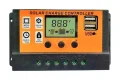
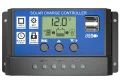
Another cause is the improper configuration of charge controllers. While most modern MPPT and PWM charge controllers have built-in electronic blocking mechanisms, these solid-state switches can fail due to power surges, lightning strikes, or extreme overheating. When the internal MOSFETs of a controller fail in a “closed” state, the controller can no longer disconnect the battery from the panels at night.
📷 Photo by us.solarpanelsnetwork.com
The Role of Bypass Diodes vs. Blocking Diodes
It is vital to distinguish between these two components, as confusion here often leads to incorrect troubleshooting. Bypass diodes are typically installed inside the junction box of a solar panel. Their job is to allow current to bypass shaded cells during the day, preventing hot spots. They do not prevent night-time reverse current.
Blocking diodes, conversely, are placed in series with the solar array to stop the battery from discharging backward. Many users mistakenly believe that if their panels have bypass diodes, they are protected against reverse current. This is a dangerous misconception that can lead to significant battery drain.
| Component | Primary Function | Impact on Reverse Current |
|---|---|---|
| Bypass Diode | Protects cells from shading | None |
| Blocking Diode | Prevents reverse flow | Total Protection |
| Charge Controller | Regulates voltage/current | High (if functional) |
| Fuse/Breaker | Overcurrent protection | Minimal (only if tripped) |
Risks Associated with Reverse Current
The primary risk is the silent depletion of your battery bank. If you notice your batteries are consistently lower in the morning than they were when the sun set, reverse current may be the culprit. Beyond energy loss, there is the risk of hardware degradation. Prolonged reverse current flow can cause the solar panels to heat up, accelerating the breakdown of the ethylene-vinyl acetate (EVA) encapsulant and the cells themselves.
Furthermore, if a short circuit occurs within the panel while reverse current is flowing, the resulting heat can lead to fire hazards or permanent failure of the entire array. Detecting this early is essential to maintaining the longevity of your renewable energy investment.
Steps to Diagnose and Prevent Reverse Current
If you suspect your system is suffering from reverse current flow, follow these steps to isolate the issue:
- Disconnect the solar array from the charge controller during the night to see if the battery drain stops.
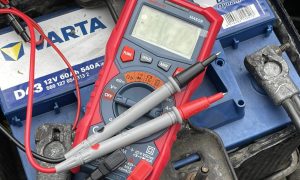
- Use a digital multimeter to measure the current flowing from the battery toward the solar array while the panels are covered or in darkness.
- Inspect the charge controller for “error” codes or signs of internal damage, such as a burnt smell or discoloration.
- Test the blocking diode (if externally installed) using the continuity or diode-test function on your multimeter.
- Replace any faulty diodes or the charge controller if it fails to perform its internal blocking function.
Best Practices for System Integrity
To avoid these issues, always ensure that your charge controller is rated for your specific array size and that it includes a robust reverse current protection feature. For DIY or custom off-grid setups, adding a Schottky diode in series with the positive wire of the solar array can provide an extra layer of security. Schottky diodes are preferred because they have a low forward voltage drop, meaning they lose less energy as heat compared to standard silicon diodes.
Regular maintenance is also key. Periodically checking the connections in your junction boxes and ensuring that your charge controller is operating within its thermal limits will prevent the premature failure of components that are responsible for managing current flow.
Q: Does my modern charge controller prevent reverse current?
A: Yes, almost all modern MPPT and PWM charge controllers are designed with internal circuitry to prevent reverse current flow, making external blocking diodes unnecessary in most standard installations.
📷 Photo by us.solarpanelsnetwork.com
Q: How do I know if my blocking diode has failed?
A: A failed diode often shows continuity in both directions when tested with a multimeter, whereas a functional diode should only allow current to flow in one direction.
Q: Is it normal for panels to get warm at night?
A: No. Solar panels should be at ambient temperature at night. If they feel warm to the touch after dark, this is a major red flag indicating that current is flowing into them and being dissipated as heat.
By understanding that solar panels are essentially large, sensitive electronic devices, you can better appreciate the importance of the protection circuitry involved. Whether it is a failed charge controller or a missing diode, addressing reverse current flow promptly will save you from costly battery replacements and premature panel failure.
📷 Photo by shieldenchannel.com