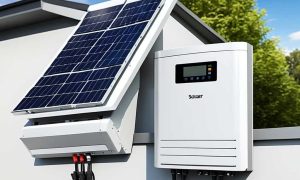


Vanonpower.com – Wiring three solar panels in series increases the total voltage while keeping current stable, whereas a parallel configuration maintains the voltage but multiplies the current output to match your battery bank’s requirements.
Choosing between series and parallel configurations is not merely about preference; it is a fundamental design decision that determines the efficiency of your solar power system. When you connect three solar panels, the arrangement dictates how your charge controller interacts with your energy source. Understanding the electrical characteristics of your panels and your inverter is the first step toward a safe and high-performing setup.
Understanding Series Configuration
In a series connection, you connect the positive terminal of the first panel to the negative terminal of the second, and the positive of the second to the negative of the third. This is often referred to as a “daisy chain.” By doing this, the voltage of the three panels adds up while the amperage (current) remains the same as a single panel.
This configuration is ideal when you need to cover a long distance between your solar array and your battery bank. Because high voltage travels more efficiently over long wires with less energy loss, series wiring allows you to use thinner gauge cables. However, a significant drawback is the “bottleneck effect.” If one panel is shaded, covered in dust, or malfunctioning, the performance of the entire string drops significantly because the current is restricted to the level of the weakest link.
Understanding Parallel Configuration
Parallel wiring involves connecting all positive terminals together and all negative terminals together. In this setup, the voltage remains equal to the voltage of a single panel, but the total current is the sum of the three panels combined. This configuration is particularly useful in environments where partial shading is common, such as an RV parked under trees or a residential roof with chimney shadows.
Because each panel operates independently, shade on one panel does not cripple the output of the other two. The trade-off is the requirement for thicker, more expensive cabling. Since amperage is higher in parallel circuits, you need wires with a larger cross-sectional area to prevent overheating and voltage drop. Additionally, you will likely need branch connectors to merge the three lines into one main cable heading to the controller.
Comparative Analysis of Wiring Methods
| Feature | Series Configuration | Parallel Configuration |
|---|---|---|
| Voltage | Sum of all panels | Same as one panel |
| Current (Amps) | Same as one panel | Sum of all panels |
| Shade Tolerance | Poor (System slows down) | Good (Independent operation) |
| Wire Gauge | Thinner (Lower current) | Thicker (Higher current) |
| Best Use Case | Long wire runs, MPPT controllers | Partial shade, PWM controllers |
Practical Steps to Wire Three Solar Panels
Before beginning, ensure all panels are identical in specifications. Mixing panels with different voltage or current ratings can lead to significant power loss and potential damage to your charge controller.
- Verify your solar charge controller’s maximum input voltage (VOC) to ensure it can handle the combined voltage of a series string or the combined current of a parallel array.
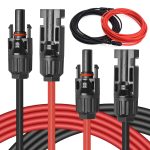
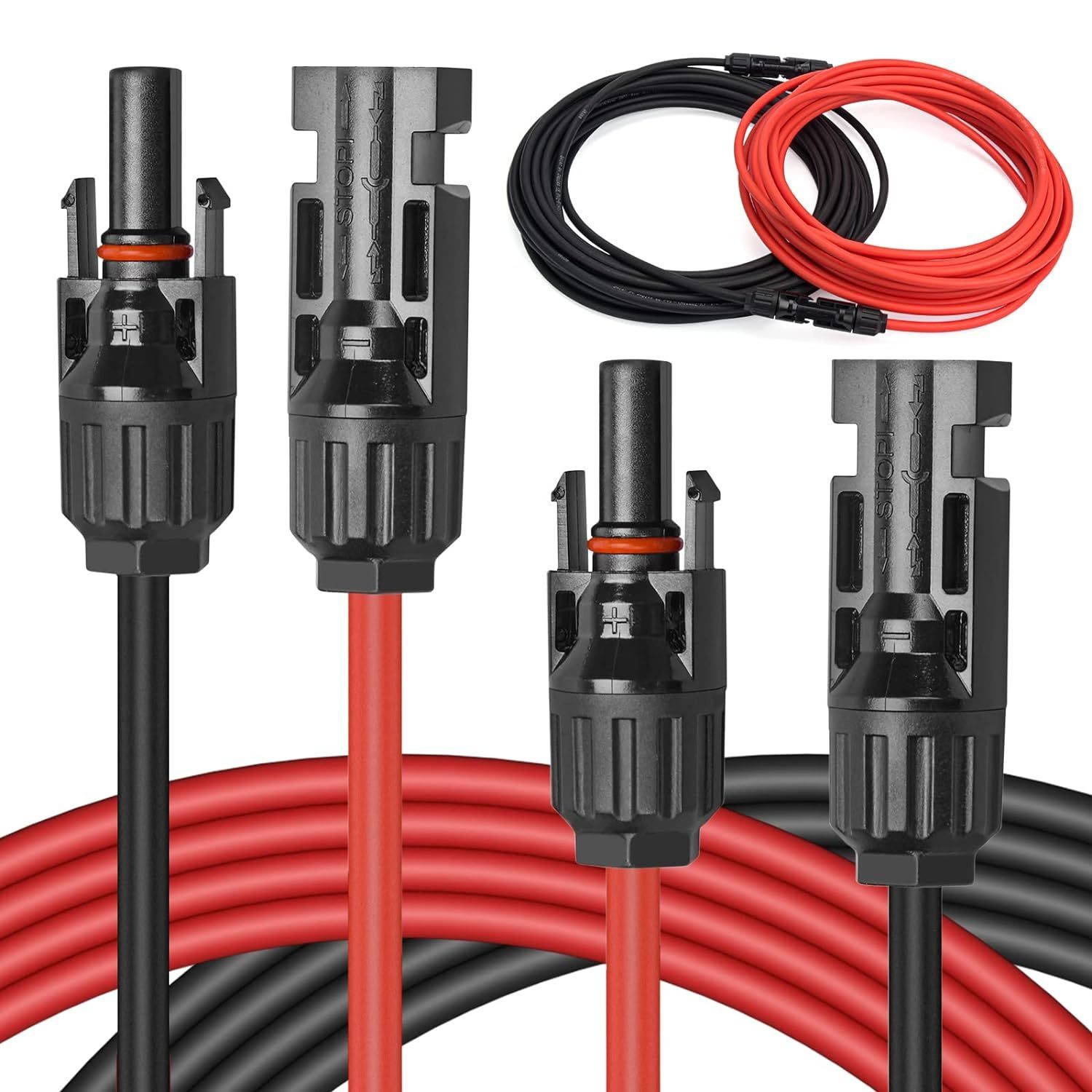
- For a series connection, take the positive MC4 connector of panel one and connect it to the negative MC4 connector of panel two, then repeat for panel three.
- For a parallel connection, use a 3-to-1 solar branch connector set to merge the three positive wires into one and the three negative wires into one.
- Always connect your charge controller to the battery bank first before connecting the solar panels to the controller to prevent damage to the electronics.
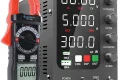
- Use a multimeter to measure the output at the end of your main cables to confirm the expected voltage or current before final integration into the system.
Risks and Common Mistakes
One of the most frequent errors is ignoring the temperature coefficient of solar panels. As temperatures drop, solar panels actually produce higher voltage. If you wire three panels in series and your voltage is already close to the charge controller’s limit, a cold morning could push the system over that limit, resulting in a blown fuse or a fried controller.
Another common mistake is failing to use proper fusing. In a parallel setup, if one panel develops a short circuit, the other two panels could potentially dump their current into the faulty one, creating a fire hazard. Always install a fuse or circuit breaker on the positive line of each individual panel in a parallel array to isolate faults.
Choosing the Right Controller
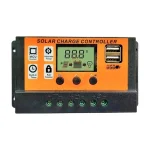
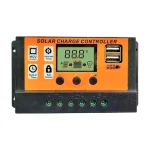
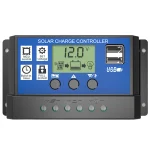
The type of charge controller you own often dictates your wiring choice. A PWM (Pulse Width Modulation) controller is generally limited to parallel wiring or systems where panel voltage is close to battery voltage. Conversely, an MPPT (Maximum Power Point Tracking) controller is designed to handle higher input voltages, making it the superior choice for series configurations. By converting excess voltage into usable charging current, MPPT controllers allow you to maximize the efficiency of your three-panel setup regardless of whether you choose series or parallel.
Q: Can I mix panels of different wattages in a three-panel array?
A: It is strongly discouraged. In series, the current will be limited to the lowest-rated panel. In parallel, the voltage will be pulled down to the lowest-rated panel, resulting in massive power loss across the entire system.
Q: What happens if I use wires that are too thin for a parallel setup?
A: The wires will encounter high resistance, leading to significant heat buildup. This not only causes energy loss but creates a serious fire risk due to melting insulation.
Q: Is there a way to get the benefits of both?
A: Yes, this is called a series-parallel combination. However, with only three panels, this is rarely efficient. This configuration is typically reserved for larger arrays of four, six, or more panels to balance voltage and current for optimal controller performance.
Ultimately, the decision rests on your specific environmental conditions and your controller’s capabilities. If you have clear, unshaded skies and long distances to cover, series wiring is your best bet. If you are dealing with trees, structures, or partial shadows, parallel wiring will provide a much more reliable and consistent energy harvest for your off-grid system.
📷 Photo by sys-elec.en.made-in-china.com