





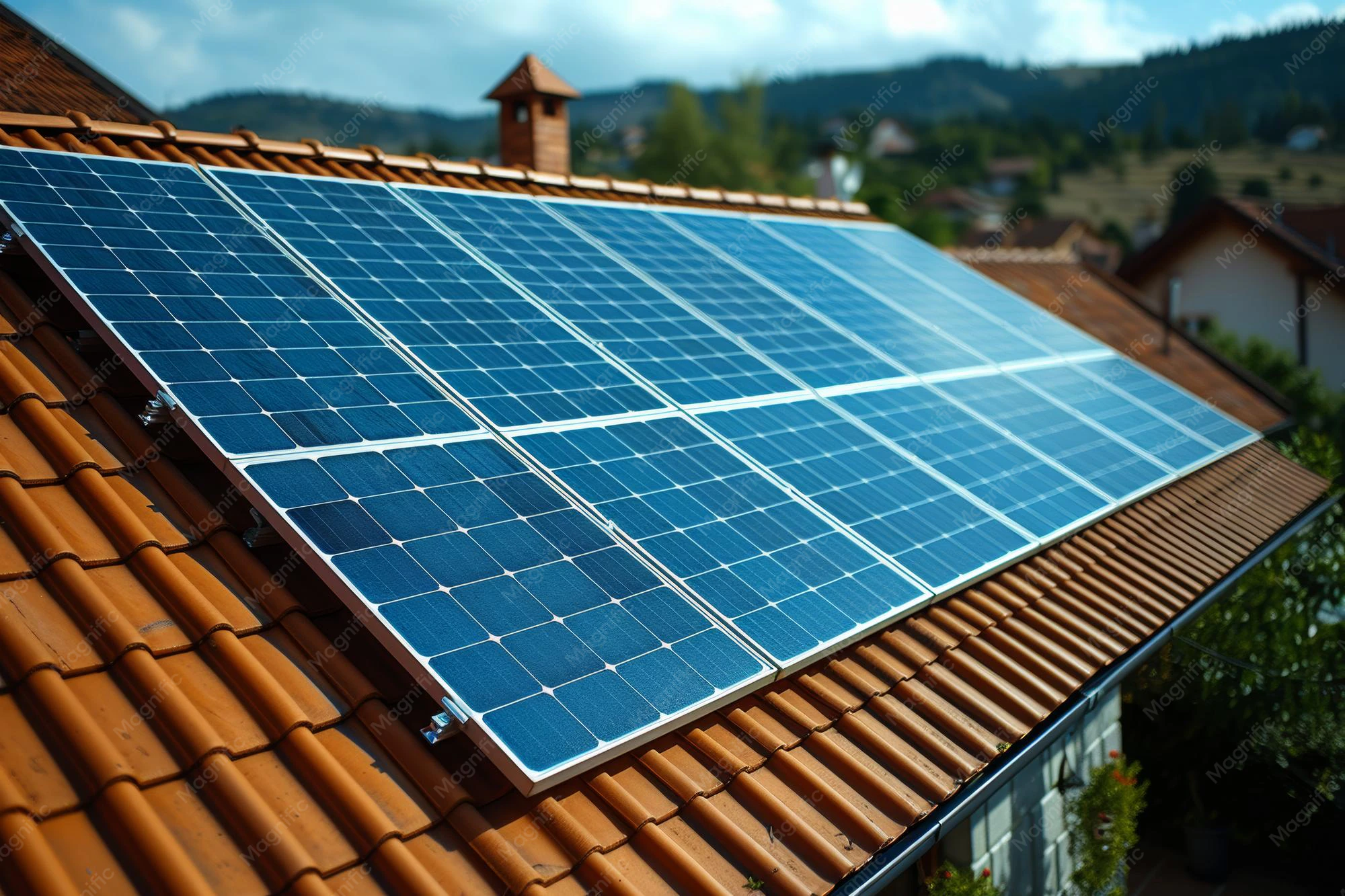
Vanonpower.com – Calculating daily solar panel yield involves multiplying your total solar panel array wattage by the local peak sun hours and applying a system efficiency factor to account for energy losses. This calculation provides a realistic estimate of the actual kilowatt-hours (kWh) your system will generate in a single day.
📷 Photo by solarpowerworldonline.com
Understanding Peak Sun Hours
Many beginners confuse “daylight hours” with “peak sun hours.” Daylight hours represent the time between sunrise and sunset, but solar panels do not produce at full capacity during the entire day. Peak sun hours refer to the intensity of sunlight, specifically when the sun provides 1,000 watts of solar energy per square meter of surface area.
For example, if your location receives 5 peak sun hours, it means that even if the sun is out for 12 hours, the total solar radiation received is equivalent to 5 hours of maximum intensity. This is the critical metric for sizing your solar system and predicting energy output.
The Core Formula for Solar Yield
To determine your daily energy production, you need three pieces of data: the total wattage of your solar array, the average peak sun hours for your specific geographic location, and a derating factor (system efficiency). The formula is: Array Wattage x Peak Sun Hours x Efficiency Factor = Daily kWh Output.
The efficiency factor is crucial because real-world conditions are rarely perfect. Factors such as high temperatures, inverter inefficiency, dust on panels, and wiring resistance typically reduce the theoretical maximum output by 15% to 25%. Most professionals use an efficiency factor of 0.75 to 0.85 to be safe.
Step-by-Step Calculation Guide
Follow these steps to estimate your system’s performance accurately:
- Identify the total wattage of your installed solar panels (e.g., 4,000 watts or 4kW).
- Consult a solar irradiance map or a reliable online database to find the average peak sun hours for your specific city during the month you are calculating.
- Determine your system efficiency factor; 0.77 is a widely accepted industry standard for well-maintained grid-tied systems.
- Multiply your array wattage by the peak sun hours to get the raw watt-hours.
- Multiply that result by your efficiency factor to account for energy losses.
- Divide the final number by 1,000 to convert the result from watt-hours to kilowatt-hours (kWh).
Example Scenario
If you have a 5kW (5,000 watts) solar system and live in an area that averages 4.5 peak sun hours per day, the calculation looks like this: 5,000 x 4.5 = 22,500 watt-hours. Applying an efficiency factor of 0.77, you get 17,325 watt-hours, or 17.32 kWh per day.
Solar System Efficiency Factors
| Component / Condition | Typical Loss Impact | Mitigation Strategy |
|---|---|---|
| Inverter Inefficiency | 3% – 5% | Use high-efficiency microinverters |
| Temperature Losses | 5% – 10% | Ensure proper airflow under panels |
| Soiling (Dirt/Dust) | 2% – 5% | Regular cleaning and maintenance |
| Wiring/DC Losses | 1% – 3% | Minimize cable run lengths |
Common Mistakes in Solar Yield Predictions

📷 Photo by buildersvilla.com
One of the most frequent errors is failing to account for seasonal variations. Peak sun hours change significantly between summer and winter. If you calculate your yield based on summer averages, you will be disappointed by the lower production during winter months. Always use the annual average for yearly estimates or monthly data for specific seasonal planning.
Another common mistake is ignoring the tilt and orientation of the panels. The calculation assumes panels are installed at an optimal angle toward the equator. If your roof faces east or west, or if the panels are laid flat, you must apply a correction factor, as the peak sun hours will be effectively lower than the regional average.
Why Real-World Output Varies
Even with precise calculations, your meter may show slightly different results from day to day. Micro-climates, such as localized morning fog or occasional afternoon cloud cover, can disrupt the ideal peak sun hour duration. Additionally, as solar panels age, they experience a slight degradation in output, typically around 0.5% per year. While this is negligible in the short term, it should be considered when projecting the yield of a system over a 20-year lifespan.
Frequently Asked Questions
Q: Does the size of the solar panel affect the peak sun hours it receives?
A: No. Peak sun hours are a measurement of the solar energy available at your specific geographic location, not a property of the solar panel itself. Larger panels just capture more of that available energy.
Q: Can I use higher peak sun hours to get more power out of my panels?
📷 Photo by resourcefordiy.blogspot.com
A: No. Your panels have a fixed maximum power rating (nameplate capacity). Even if you have 10 peak sun hours, your system cannot output more power than its rated capacity at any given moment; it will simply reach that capacity faster and maintain it for a longer duration.
Q: How do I find the peak sun hours for my specific address?
A: You can use free online tools such as the Global Solar Atlas or the PVWatts Calculator provided by NREL. These tools use satellite data to provide highly accurate solar resource information based on your exact coordinates.
Final Thoughts on System Optimization
Calculating your yield is the first step toward energy independence. By understanding how peak sun hours and efficiency factors interact, you can better manage your energy consumption and determine if adding battery storage or extra panels is a worthwhile investment. Always prioritize regular maintenance and keep your panels free of debris to ensure your actual performance stays as close to your calculated estimates as possible.
📷 Photo by freepik.com