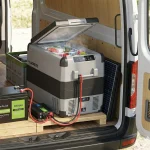




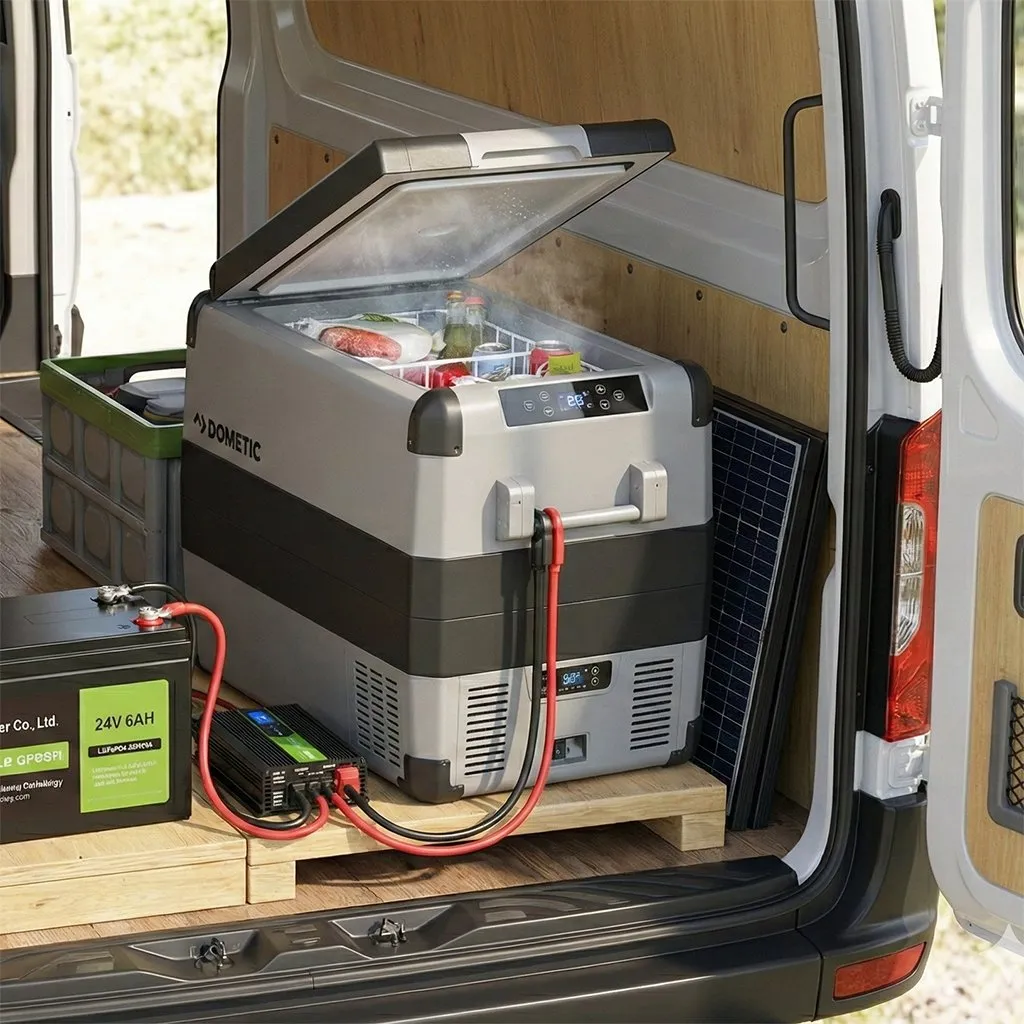
Vanonpower.com – A 100Ah LiFePO4 battery can typically run a standard 12V refrigerator for 15 to 30 hours, depending on the fridge’s efficiency, ambient temperature, and the actual power consumption cycles of the compressor.
Calculating the runtime of a 12V refrigerator is not as simple as dividing total battery capacity by the fridge’s stated wattage. Because a refrigerator compressor cycles on and off rather than running continuously, the “duty cycle” is the most critical variable in determining how long your off-grid power system will last.
Understanding the Math Behind the Runtime
To estimate your runtime, you must first understand the usable capacity of your battery. Unlike lead-acid batteries, LiFePO4 batteries can be safely discharged to 100% of their capacity, though 90% is often recommended for longevity. A 100Ah 12V battery provides 1,280 watt-hours (12.8V multiplied by 100Ah).
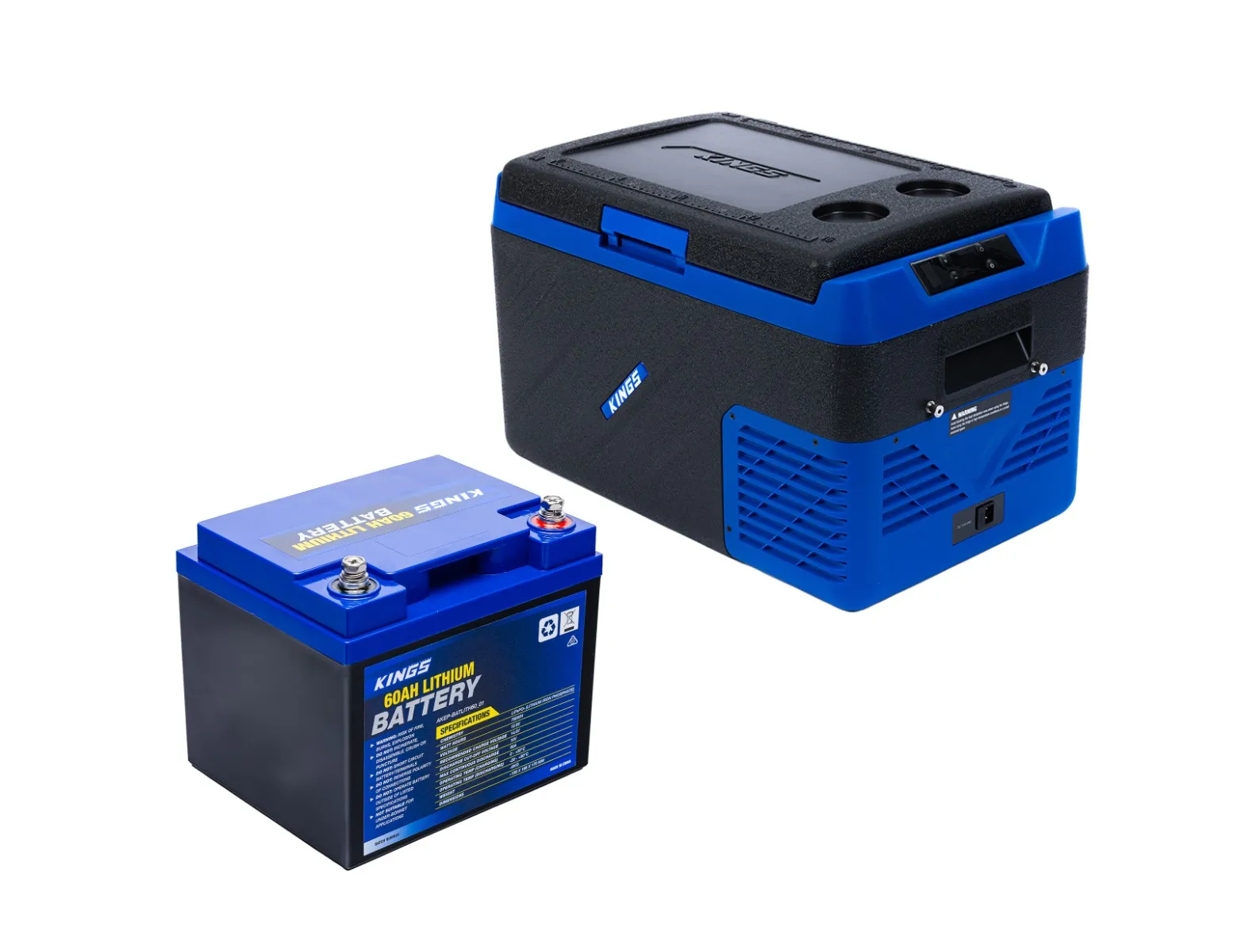
📷 Photo by ebay.com.au
If your 12V refrigerator consumes 50 watts while the compressor is running, you cannot assume it uses 50 watts every hour. In a moderate climate of 25 degrees Celsius, a well-insulated 12V fridge might only run its compressor for 30% of the time. This results in an average power draw of roughly 15 watts per hour. In this scenario, your 1,280Wh battery would theoretically last for 85 hours, but real-world inefficiencies and depth-of-discharge limits usually bring this down to a more conservative 60 to 70 hours.
Factors Influencing Battery Performance
Several environmental and mechanical factors will significantly alter your results. The most common mistake users make is assuming their fridge will perform the same way in a hot vehicle as it does in a climate-controlled room.
Ambient temperature is the primary enemy of battery runtime. When the outside temperature rises, the compressor must work harder and stay on longer to maintain the internal set temperature. Additionally, the amount of food inside the fridge acts as a thermal mass; a full fridge retains cold better than an empty one, leading to less frequent compressor cycling.
Comparison of Power Scenarios
| Scenario | Estimated Duty Cycle | Average Hourly Draw | Estimated Runtime |
|---|---|---|---|
| Cool Weather (15C) | 20% | 10W | 115 Hours |
| Moderate Weather (25C) | 35% | 17.5W | 65 Hours |
| Hot Weather (35C) | 60% | 30W | 38 Hours |
Steps to Maximize Your Battery Life
If you find that your 100Ah battery is draining faster than expected, you can follow these practical steps to extend your off-grid independence without needing to purchase additional battery banks.
- Pre-chill your food and drinks in a home refrigerator before placing them into the 12V unit.
- Keep the refrigerator out of direct sunlight and ensure there is adequate ventilation around the compressor vents to prevent heat buildup.
- Set the internal temperature to the highest safe setting for your food; every degree lower requires significantly more energy.
- Fill empty spaces in the fridge with water bottles or ice packs, as frozen mass helps maintain temperatures longer than empty air.
- Ensure the door seal is airtight; a leaking gasket is the most common cause of excessive energy consumption in older fridges.
Common Mistakes to Avoid
One frequent error is relying on the “Max Power” rating found on the manufacturer’s sticker. This rating usually indicates the peak draw during startup or when the compressor is running at full capacity. Using this number for your calculations will lead to a gross underestimation of your battery life. Always look for the “Average Power Consumption” or “Energy Consumption per 24h” listed in the technical manual.
Another mistake is ignoring voltage drop in your wiring. If your cables are too thin or too long, the refrigerator may shut off prematurely because it detects a low voltage at the input, even if the battery still has plenty of charge remaining. Always use thick, high-quality copper wiring to ensure the full potential of your LiFePO4 battery reaches the appliance.
Risk of Deep Discharge
While LiFePO4 chemistry is robust, constantly draining the battery to absolute zero can trigger the internal Battery Management System (BMS) to cut off power abruptly. This can result in your refrigerator shutting down unexpectedly, potentially spoiling your food. It is best practice to monitor your battery voltage via a dedicated shunt or Bluetooth monitor to ensure you remain within the safe operating zone.
Read also: 100Ah vs 200Ah Lithium Battery: How Much Usable Power Do You Get?
Q: Can I use a solar panel to extend the runtime of my 100Ah battery?
A: Yes, adding a 100W to 200W solar panel setup can often offset the daily energy consumption of a 12V fridge entirely, allowing for indefinite operation during sunny days.
Q: Does the age of the LiFePO4 battery affect its performance?
A: LiFePO4 batteries have a very long cycle life, usually 2,000 to 5,000 cycles, meaning they retain most of their capacity for many years; however, extreme heat exposure can degrade internal cells faster than normal usage.
Q: Is it better to keep the fridge running 24/7 or turn it off at night?
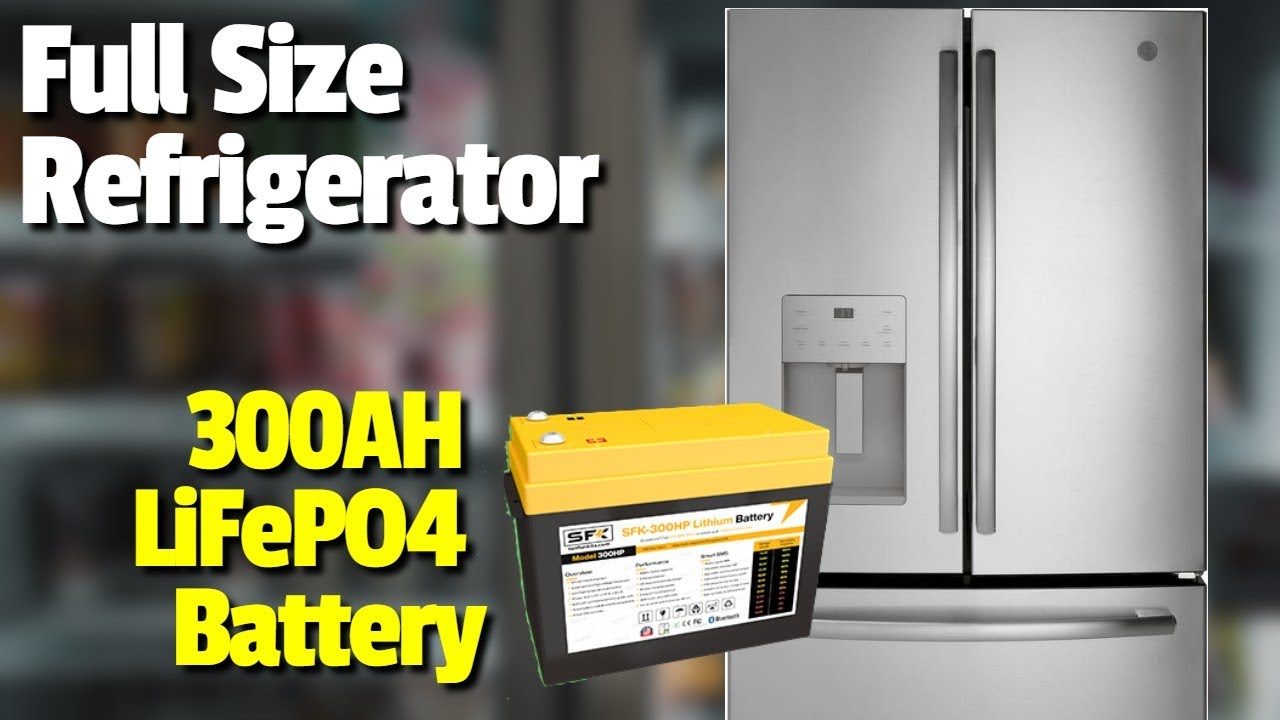
📷 Photo by youtube.com
A: It is generally more energy-efficient to keep the fridge running at a steady temperature rather than letting it warm up and forcing the compressor to work at full power to cool it back down later.
Ultimately, a 100Ah LiFePO4 battery is an excellent choice for a mobile refrigeration setup. By managing your thermal environment and understanding the duty cycle of your compressor, you can easily support a multi-day trip without needing to recharge your power source.
📷 Photo by vtcbatt.com