





Vanonpower.com – Lithium battery voltage drops under load primarily due to internal resistance and chemical polarization, which causes the battery to struggle to maintain its nominal voltage when high current is drawn. This phenomenon, known as voltage sag, is a fundamental characteristic of electrochemical energy storage rather than a sign of a defective cell.
Understanding Voltage Sag and Internal Resistance
Every lithium battery contains internal resistance, which originates from the electrodes, the electrolyte, and the physical connections within the battery pack. When you connect a load—such as a motor, power tool, or inverter—the current must flow through this resistance. According to Ohm’s Law, as current increases, the voltage drop across this internal resistance increases, resulting in a lower terminal voltage at the battery output.
Beyond simple resistance, chemical polarization plays a significant role. When a battery is under load, ions must move through the electrolyte and intercalate into the anode or cathode. If the demand for current is too high, the rate of ion movement cannot keep up with the electrical demand, leading to a temporary concentration gradient that manifests as a drop in measurable voltage.
Common Causes of Excessive Voltage Drop
While some voltage sag is normal, excessive drops often indicate underlying issues that can damage the battery or reduce system efficiency. The most frequent culprit is a battery that is nearing the end of its state of charge. As the lithium ions are depleted, the internal chemistry becomes less efficient at sustaining high current flow.
Temperature is another critical factor. Lithium-ion batteries rely on chemical reactions that are temperature-sensitive. In cold environments, the electrolyte becomes more viscous, and the movement of ions slows down significantly. This increases the effective internal resistance of the battery, leading to a much sharper voltage drop compared to operation at room temperature.
Poor electrical connections also mimic the symptoms of a failing battery. If your wiring is too thin, or if terminal connectors are loose or oxidized, the resistance in the external circuit adds to the internal resistance of the battery. This creates a cumulative voltage drop that can cause devices to shut down prematurely, even if the battery itself is healthy.
The Impact of C-Rating on Performance
Read also: LiFePO4 Internal Resistance: How to Measure Cell Health
The C-rating of a battery defines the maximum current it can safely provide relative to its capacity. If you pull current that exceeds the battery’s rated discharge capacity, the voltage will plummet rapidly. This is a common mistake in DIY solar setups or drone building, where users try to power high-demand motors with batteries designed for low-drain applications like LED lighting.
| Metric | Low Load Impact | High Load Impact |
|---|---|---|
| Voltage Stability | Minimal Drop | Significant Sag |
| Heat Generation | Negligible | High |
| Cycle Life | Extended | Accelerated Degradation |
| Efficiency | High | Reduced |
Steps to Minimize Voltage Sag in Your System
If you are experiencing performance issues due to voltage drop, follow these practical steps to diagnose and mitigate the problem:
- Check all physical connections for oxidation, corrosion, or loose fasteners that could be adding unnecessary resistance to the circuit.
- Verify that your cable gauge is sufficient for the maximum amperage of your load; undersized wires act as resistors and contribute to the overall voltage drop.
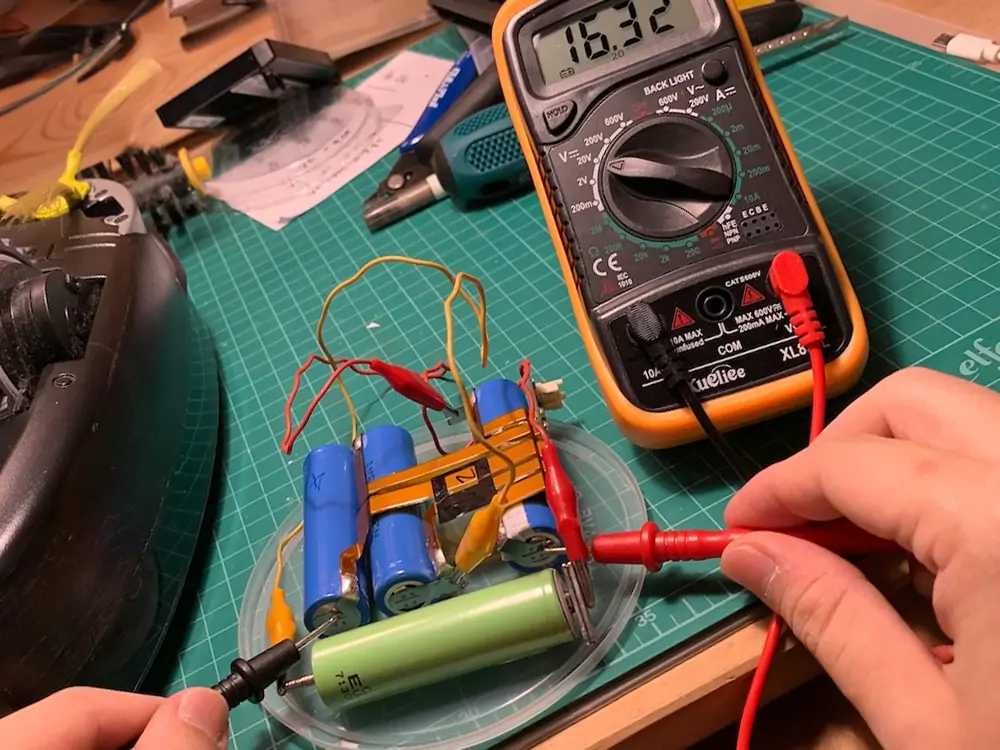
- Measure the battery voltage at rest versus the voltage under load using a multimeter to determine if the sag is within the manufacturer’s specified range.
- Ensure the battery is operating within the recommended temperature range, as cold weather significantly hampers chemical ion transfer.
- Upgrade to a battery with a higher continuous discharge C-rating if your equipment consistently draws current near the current battery’s maximum limit.
Risks of Ignoring Voltage Drop
📷 Photo by legendbatteries.com
Ignoring persistent voltage sag can lead to several long-term problems. The most immediate risk is “low voltage cutoff” (LVC), where the battery management system (BMS) or the device itself shuts down to protect the cells. Frequent LVC events can trigger fault codes in sensitive electronics and lead to frustration during critical operations.
Furthermore, excessive voltage sag generates heat. When a battery struggles to provide power, the energy is dissipated as heat rather than electrical work. This heat accelerates the aging of the electrolyte and can lead to the formation of lithium plating on the anode, which permanently reduces the battery’s capacity and increases its internal resistance even further, creating a vicious cycle of degradation.
Frequently Asked Questions
Q: Is it normal for my lithium battery voltage to bounce back after the load is removed?
A: Yes, this is known as voltage recovery. Once the current demand ceases, the chemical polarization dissipates and the ion concentration stabilizes, allowing the terminal voltage to return toward its open-circuit level.
Q: Can a charger fix a battery that drops voltage too quickly?
A: If the voltage drop is caused by high internal resistance due to age or physical damage, a charger cannot reverse the process. A full charge might mask the issue temporarily, but the sag will return as soon as a load is applied.
Q: Does the state of charge (SoC) affect how much the voltage drops?
A: Absolutely. As a battery approaches a low state of charge, its internal resistance typically increases, making the voltage sag much more pronounced compared to when the battery is fully charged.
Final Considerations for Battery Health
To maximize the lifespan of your lithium batteries, always aim to operate them within the middle 20% to 80% range of their capacity. Avoid pushing the battery to its absolute limits, as the voltage sag observed at the edges of the capacity curve is significantly more volatile. By understanding the relationship between current, resistance, and temperature, you can build more reliable systems and prevent premature battery failure.
📷 Photo by jetronlinstrument.com