


Vanonpower.com – Choosing between a 12V and 24V inverter depends primarily on your total power demand, as 24V systems offer significantly higher efficiency and lower current draw for high-wattage appliances compared to 12V setups.
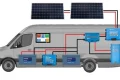
When designing an off-grid solar system, marine electrical layout, or an RV power bank, the choice of system voltage is the foundational decision that dictates your entire infrastructure. While 12V systems remain the standard for automotive and small-scale applications, 24V systems are increasingly favored for serious off-grid setups. The primary difference lies in the relationship between voltage, current, and resistance, which ultimately dictates how much energy is lost as heat during power transmission.
The Physics of Efficiency
The core advantage of a 24V inverter system is its ability to reduce current (amperage) for the same amount of power output. According to Ohm’s Law, power is the product of voltage and current (P = V x I). If you need to run a 2,000-watt load, a 12V system must pull roughly 166 amps from the battery bank, whereas a 24V system only draws about 83 amps. This reduction in current is critical because heat loss in cables—known as resistive heating—is proportional to the square of the current.
Lower current allows you to use thinner, more affordable wiring to connect your battery bank to your inverter. In a 12V system, pulling high current through thin cables results in significant voltage drop, which can cause your inverter to trigger a low-voltage alarm prematurely. By doubling the voltage to 24V, you minimize these losses, allowing more of your stored energy to reach the appliance rather than dissipating into the air as waste heat.
Comparing System Voltages
The following table outlines the practical differences between 12V and 24V systems when powering a 2,000-watt load, assuming a standard inverter efficiency.
| Feature | 12V System | 24V System |
|---|---|---|
| Current Draw (2000W) | ~166 Amps | ~83 Amps |
| Cable Gauge Required | Very Thick (e.g., 2/0 AWG) | Thinner (e.g., 4 AWG) |
| Voltage Drop | High | Low |
| System Complexity | Simple (Plug & Play) | Moderate (Series Wiring) |
| Best For | Small RVs, Cars, Camping | Off-grid Cabins, Large Solar |
When to Choose 12V
A 12V system is the industry standard for a reason. Most automotive accessories, lights, and small electronic chargers are designed specifically for 12V direct current. If your power needs are modest—such as charging laptops, running a few LED lights, and powering a small cooling fan—a 12V system is the most cost-effective route. You will not need to worry about balancing batteries in series, and the abundance of 12V-compatible components makes troubleshooting and expansion straightforward.
When to Choose 24V
Once you cross the threshold of 1,500 to 2,000 watts of continuous load, a 24V system becomes the superior choice. If you intend to run a microwave, a coffee maker, or a larger refrigerator, the 12V system will struggle to handle the high current requirements without massive, expensive copper cabling. Moving to 24V allows your system to run cooler, more reliably, and with less strain on your battery terminals and fuses.
Steps to Convert or Build a 24V System
If you have decided that a 24V system is the right fit for your energy needs, follow these steps to ensure a safe and efficient setup:
- Select high-quality lithium or lead-acid batteries that are rated for series connection.
- Connect two 12V batteries in series by linking the positive terminal of the first battery to the negative terminal of the second battery using a high-gauge jumper cable.
- Measure the voltage across the remaining open positive and negative terminals; it should read approximately 24V to 25.6V depending on the battery chemistry.
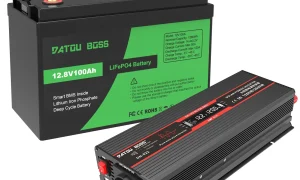
- Install a 24V-compatible charge controller and a 24V inverter, ensuring that all fuses and breakers are sized correctly for the lower current but higher potential voltage.
- Verify that all other peripheral devices (lights, USB chargers) are either rated for 24V or connected via a 24V-to-12V DC-DC step-down converter.
Common Mistakes to Avoid
One of the most frequent errors users make is mixing battery ages or capacities within a 24V string. When batteries are in series, they must be identical in age, capacity, and chemistry to prevent one battery from overcharging or undercharging, which can lead to premature failure. Another common mistake is neglecting the DC-DC converter. If you have legacy 12V equipment, do not attempt to connect it to just one of the batteries in your 24V series, as this will cause severe battery imbalance.
Additionally, users often underestimate the importance of proper fusing. Even though a 24V system uses less current than a 12V system, a short circuit in a 24V bank is still dangerous. Always use appropriately rated DC breakers or fuses as close to the battery bank as possible to protect against accidental shorts and over-current conditions.
Frequently Asked Questions
Q: Can I use my existing 12V appliances with a 24V inverter system?
A: Not directly. You must use a 24V-to-12V DC-DC converter to step down the voltage for your 12V appliances, otherwise, you risk destroying the equipment.
Q: Is it more expensive to build a 24V system?
A: While the inverter and charge controller might have a similar price point, you often save money on wiring and fuses, making the total cost of ownership comparable or even cheaper for high-power systems.
Q: Does a 24V system charge faster than a 12V system?
A: The charging speed is determined by the output of your solar array or charger, but a 24V system is generally more efficient at transferring that energy into the battery bank due to reduced resistive losses in the cables.
Ultimately, the efficiency of your inverter system is defined by how well it manages the flow of energy. While 12V is perfect for simplicity and low-power needs, 24V is the professional choice for those looking to maximize performance and minimize losses in a robust off-grid power system.
📷 Photo by ebay.co.uk