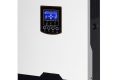


Vanonpower.com – Inverter fan noise is primarily caused by excessive heat accumulation triggered by high load operations or obstructed airflow, which forces the cooling fan to run at maximum RPM. You can reduce this noise by optimizing ventilation, cleaning dust accumulation, and adjusting the load to prevent the inverter from reaching thermal thresholds that trigger aggressive fan cycling.
Understanding the Mechanics of Inverter Fan Noise
An inverter is a complex piece of power electronics that converts DC to AC. During this conversion, internal components like MOSFETs and capacitors generate significant heat. To protect these sensitive circuits, inverters are equipped with thermal sensors that monitor internal temperatures. When the temperature crosses a specific threshold, the control board sends a signal to the cooling fan to ramp up speed, resulting in the audible whirring or “jet engine” noise that many users find disruptive.
The noise is not necessarily a sign of a faulty fan, but rather an indicator that the inverter is working harder than its current environment allows. If the fan is cycling on and off repeatedly, it suggests the internal temperature is hovering exactly at the trigger point, causing the controller to struggle with heat management. Addressing this requires a combination of environmental adjustments and maintenance.
Common Causes of Excessive Heat
The most common culprit for loud fan noise is poor placement. If an inverter is installed in an enclosed cabinet without adequate intake and exhaust vents, it creates a heat trap. The inverter pulls in the hot air it just expelled, creating a feedback loop where the internal temperature never stabilizes. Additionally, dusty environments can clog the heatsink fins, drastically reducing the efficiency of the cooling system.
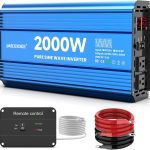
Another frequent cause is operating the inverter consistently near its maximum capacity. Inverters are most efficient when running at 50% to 80% of their rated load. Pushing a 2000W inverter to pull 1900W for extended periods generates substantial waste heat that the standard cooling system may not be able to dissipate quietly.
Practical Steps to Reduce Fan Noise
Read also: Is a High Frequency Inverter Better Than a Low Frequency Inverter?
Reducing the noise level requires a systematic approach to airflow management and load distribution. Follow these steps to improve your inverter’s thermal performance:
- Clear the perimeter: Ensure there is at least 6 to 12 inches of clearance on all sides of the inverter to allow for natural convection.
- Clean the intake vents: Use a soft-bristled brush or compressed air to remove dust and debris from the intake grilles and exhaust ports.
- Optimize ambient temperature: If possible, move the inverter to a cooler, shaded location or install a small auxiliary ventilation fan to move air around the unit.
- Evaluate your load: Check your power consumption logs; if you are consistently hitting the peak capacity, consider upgrading to a higher-rated inverter to allow for cooler, more efficient operation.
- Check for firmware updates: Some modern smart inverters receive firmware updates that optimize fan control algorithms, potentially making the cooling profile less aggressive.
Comparison of Inverter Thermal Environments
| Environment Type | Fan Behavior | Noise Level | Recommended Action |
|---|---|---|---|
| Enclosed Cabinet | Constant high-speed cycling | High / Disruptive | Install active exhaust fans |
| Open Air (Shaded) | Minimal, intermittent | Low / Whisper | Standard maintenance only |
| Dusty/Industrial | Aggressive, constant | High / Grinding | Deep clean heatsinks |
| Overloaded (90%+) | Maximum RPM | Very High | Reduce load or upgrade unit |
The Risks of Ignoring Fan Cycling
While the noise is annoying, the underlying heat is the real danger. Prolonged exposure to high heat reduces the lifespan of electrolytic capacitors, which are the most common point of failure in inverters. If the fan is constantly cycling, it also places unnecessary mechanical wear on the fan bearings. Over time, a noisy, cycling fan may transition into a failing fan, which could lead to an unexpected thermal shutdown of your entire power system.
If you notice the fan noise has changed from a smooth whirring to a clicking, grinding, or rattling sound, this is a sign of bearing failure. In such cases, cleaning will not solve the issue, and the fan assembly likely needs to be replaced to prevent the inverter from overheating during operation.
Common Mistakes in Fan Noise Mitigation
One major mistake users make is attempting to manually slow down or disconnect the fan to stop the noise. This is extremely dangerous and will lead to rapid component failure or, in worst-case scenarios, an electrical fire. Another error is placing the inverter on a soft surface like a carpet or foam mat, which blocks bottom-mounted intake vents and prevents proper airflow, exacerbating the heat problem you are trying to solve.
Always ensure the inverter is mounted on a hard, vertical surface if the design allows, as this promotes better heat dissipation through the chassis. If the inverter must be in a living space, consider sound-dampening panels around the enclosure, provided that these panels do not obstruct the necessary airflow path.
Frequently Asked Questions
Q: Is it normal for my inverter fan to turn on even when the load is low?
A: Yes, many modern inverters perform a self-test of the cooling fan upon startup, or they may trigger the fan if the ambient room temperature is already quite high.
Q: Can I replace the stock fan with a silent computer fan?
A: While possible for advanced users, you must ensure the replacement fan has the same voltage, current draw, and similar or higher CFM (cubic feet per minute) rating to ensure the internal components stay cool enough under heavy load.
Q: How often should I clean the inverter vents?
A: In a clean home environment, a light dusting every six months is sufficient. If the inverter is in a workshop or garage, you should inspect the vents every month to prevent dust buildup.
By focusing on proper airflow, load management, and regular maintenance, you can significantly reduce the audible impact of your inverter without compromising its safety or longevity. Remember that a quiet inverter is usually a healthy, well-ventilated one.
📷 Photo by highvelocityoutlets.com