

Vanonpower.com – Inverter idle power consumption typically ranges from 10 to 50 watts depending on the unit’s capacity and quality, which can drain between 240 and 1,200 watt-hours of battery capacity over a 24-hour period if left on without a load.
Many users overlook the “idle draw” or “self-consumption” of an inverter, assuming that if no appliances are plugged in, no power is being used. This is a significant misconception. An inverter must remain powered on to monitor for load demands, a process that requires a continuous flow of electricity from your battery bank to keep its internal circuitry and cooling fans operational.
Understanding Inverter Idle Consumption
The idle power consumption is the amount of energy an inverter consumes just to stay in a “standby” or “ready” state. This energy is converted into heat and small amounts of electrical noise. The larger the inverter, the higher the idle consumption usually is, because larger units have bigger transformers and more complex circuitry required to handle high wattage surges.
If you have a 3,000-watt inverter, it might consume 40 to 60 watts just to be switched on. Over a single day, this equates to roughly 1.2 kilowatt-hours of battery capacity drained without you having used a single appliance. For off-grid solar setups or camper vans, this “invisible” load can be the difference between a fully charged battery in the morning and a dead system.
Factors Influencing Power Drain
Several technical factors dictate how much power your specific inverter will waste. The most prominent is the inverter topology. Pure sine wave inverters are more complex than modified sine wave units and generally require more power to maintain their output waveform. Additionally, the age and efficiency rating of the unit play a role; modern high-frequency inverters tend to be more efficient than older, low-frequency transformer-based models.
Environmental conditions also matter. If your inverter is placed in a hot, poorly ventilated area, the built-in cooling fans may kick on even when the device is at idle. These fans consume extra power, further increasing the total discharge rate from your battery bank.
| Inverter Capacity | Typical Idle Draw (Watts) | Daily Battery Drain (24hrs) |
|---|---|---|
| 300W – 600W | 5W – 15W | 120Wh – 360Wh |
| 1000W – 1500W | 15W – 30W | 360Wh – 720Wh |
| 2000W – 3000W | 30W – 60W | 720Wh – 1440Wh |
| 5000W+ | 60W – 100W+ | 1440Wh – 2400Wh+ |
How to Minimize Idle Power Loss
You do not have to accept high idle consumption as a permanent cost of your electrical system. By implementing better power management habits and hardware configurations, you can drastically extend your battery life.
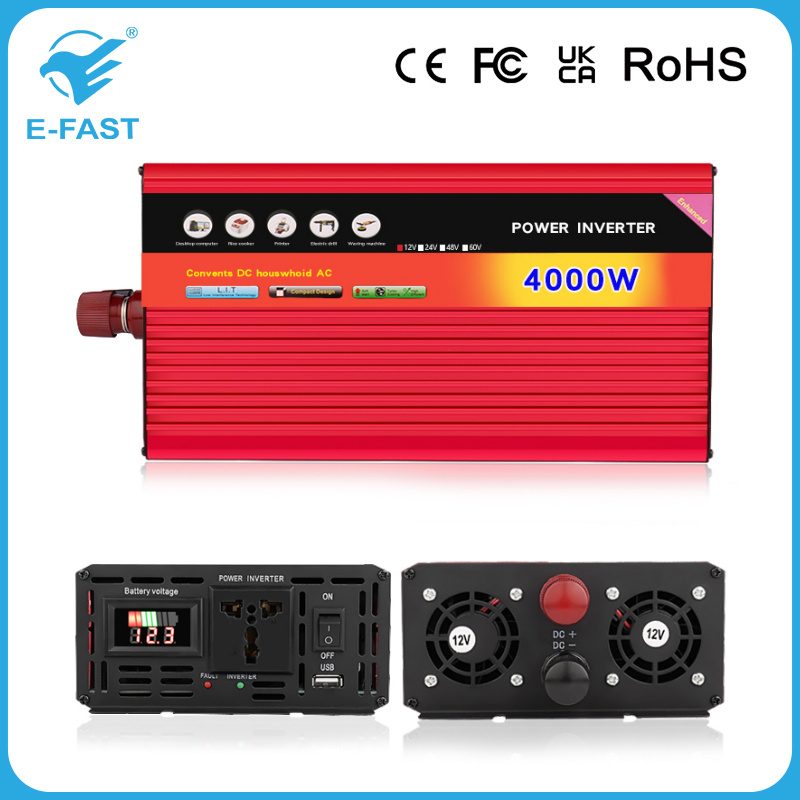
📷 Photo by e-fast.en.made-in-china.com
- Turn off the inverter completely when not in use. If you are not actively using AC power, use a physical DC disconnect switch or the inverter’s main power button.
- Install a remote switch. Many high-quality inverters allow for a remote control panel that can put the unit into a “true” sleep mode rather than just an idle state.
- Right-size your inverter. If you only need to charge a laptop or run a small fan, do not use a massive 3,000-watt inverter. Using a smaller 300-watt inverter for small loads will significantly reduce the base idle draw.
- Check the cooling environment. Ensure the inverter is in a cool, ventilated space so the fans do not run unnecessarily during idle periods.
- Use DC-direct power whenever possible. Charge phones, tablets, and laptops via 12V DC USB outlets instead of using the inverter to power a standard AC wall adapter.
Risks of Ignoring Idle Consumption
The primary risk is battery sulfation (for lead-acid batteries) or premature discharge (for Lithium-ion). If you leave your inverter on while your vehicle or cabin is parked for several days without a charging source, the idle draw will slowly drain your battery below its recommended depth of discharge. Repeatedly deep-discharging your batteries significantly shortens their lifespan, potentially costing you hundreds of dollars in early replacements.
Another risk is heat accumulation. Even at idle, an inverter generates heat. If it is stored in a confined, non-ventilated compartment, that heat can degrade the internal capacitors over time, leading to premature failure of the inverter itself.
Common Mistakes Users Make
The most common error is assuming that “idle” means the inverter is off. Many people leave their inverter on 24/7 to power a small device like a Wi-Fi router or a standby clock. While convenient, this is an inefficient way to manage power. If you need 24/7 power for small electronics, look for specialized low-draw 12V adapters rather than running a large AC inverter all day.
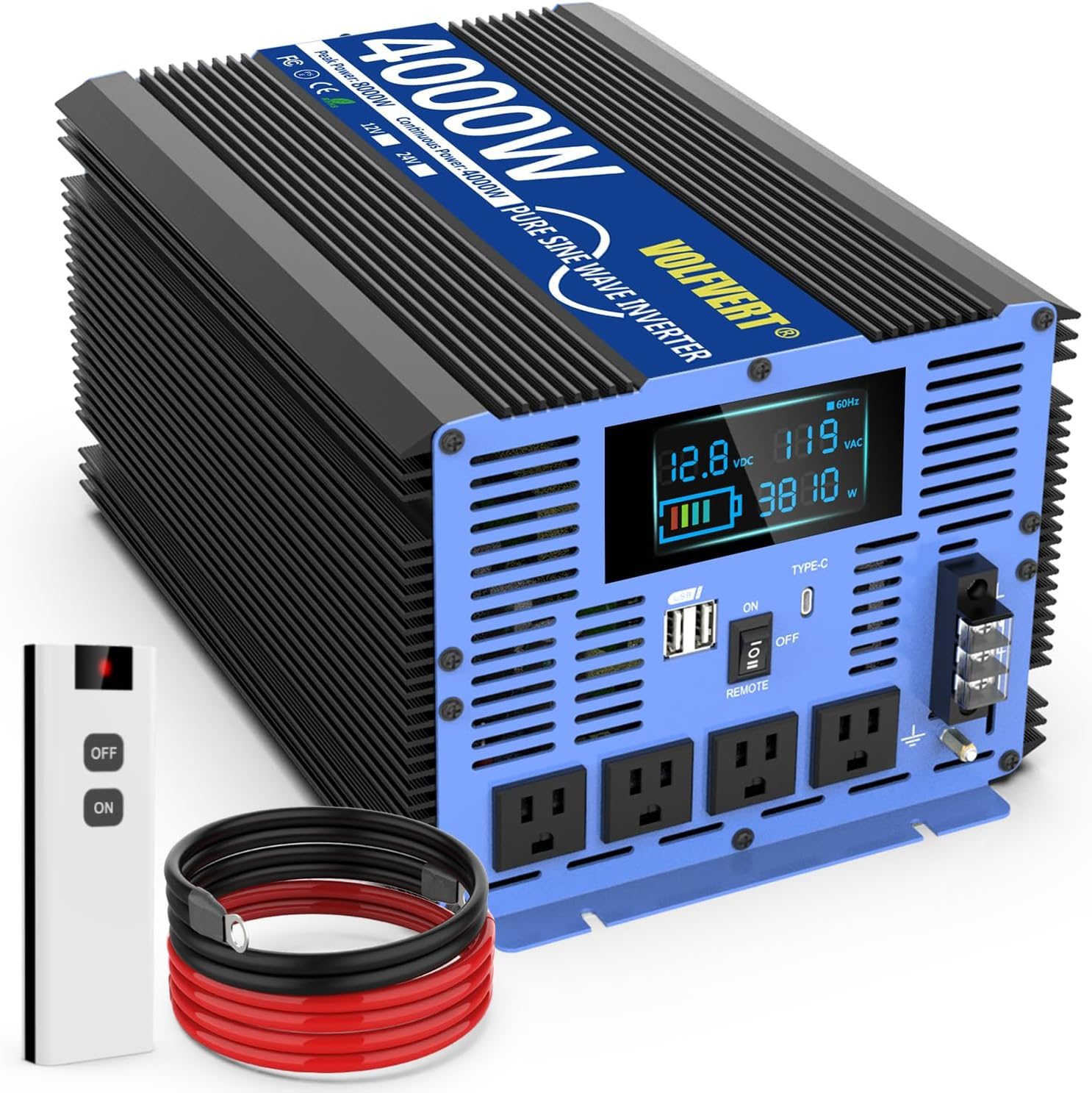
📷 Photo by tiendamia.cr
Another mistake is failing to check the technical specifications sheet before purchasing. Manufacturers often hide the “idle current” or “no-load current” in the fine print. Always compare this value across different models before you buy.
Q: Does the idle power consumption change if I plug in a low-power device?
A: Yes, but only slightly. The inverter has a base idle draw, and then it adds the power required to convert the DC to AC for your device. The efficiency of the inverter also drops when running very low loads, meaning you lose more energy in the conversion process.
Q: Can I use a timer to manage my inverter?
A: Yes, using a smart DC relay or a physical timer on the remote switch can be an excellent way to ensure the inverter shuts down automatically during nighttime hours when you are sleeping and not using appliances.
Q: Is it better to have one large inverter or two smaller ones?
A: For most off-grid systems, having one small, efficient inverter for low-draw items and a larger one that you only turn on when needed for heavy appliances is the most energy-efficient approach.
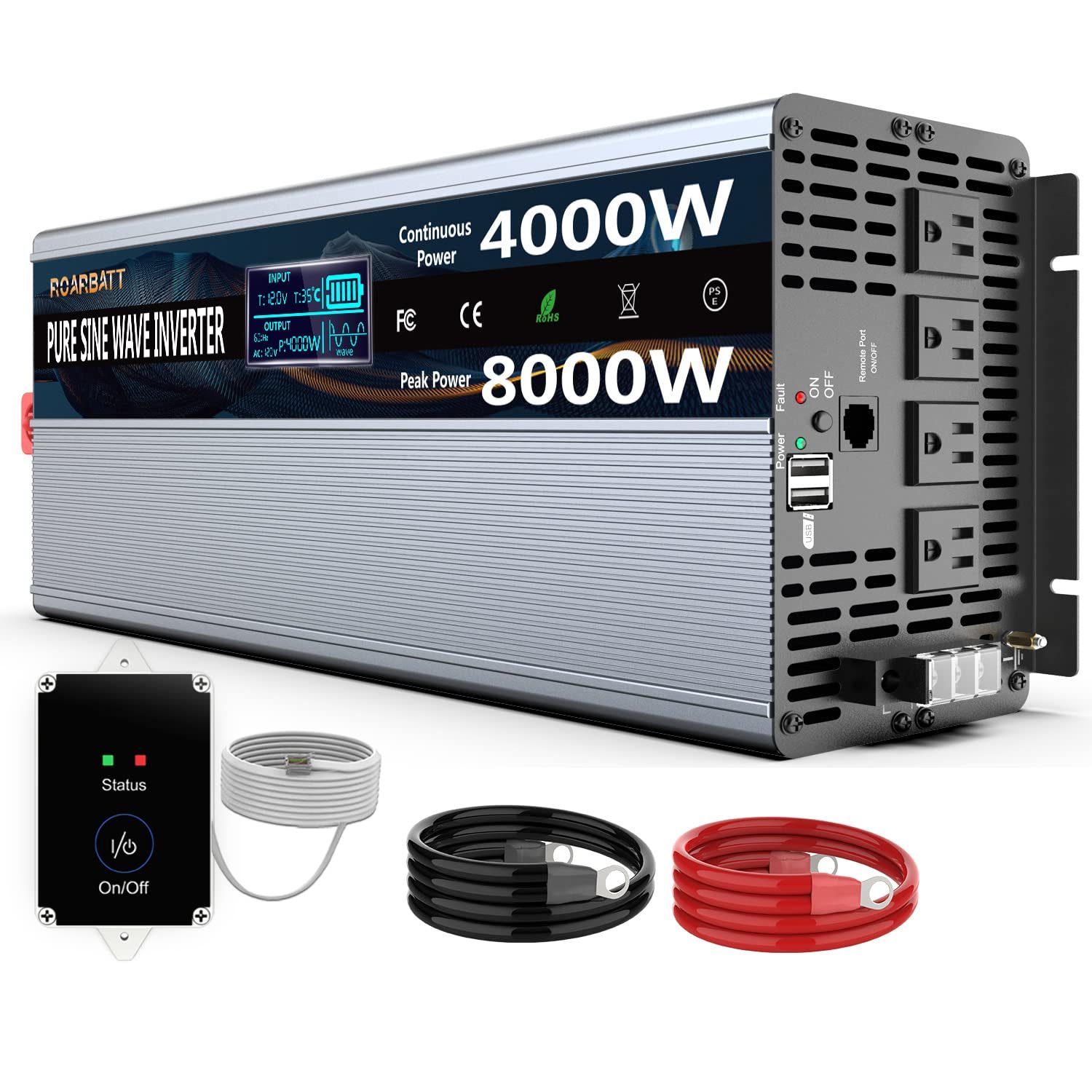
📷 Photo by nellisauction.com
📷 Photo by storage.googleapis.com