




Vanonpower.com – Reading a LiFePO4 discharge curve under heavy load requires identifying the voltage sag caused by internal resistance and distinguishing it from the actual state-of-charge (SOC) by allowing the battery to rest before measurement. Under significant current draw, the operating voltage drops lower than the resting voltage, making it essential to factor in the Peukert effect and voltage recovery to avoid premature low-voltage cutoffs.
📷 Photo by powmr.com
Understanding the LiFePO4 Discharge Profile
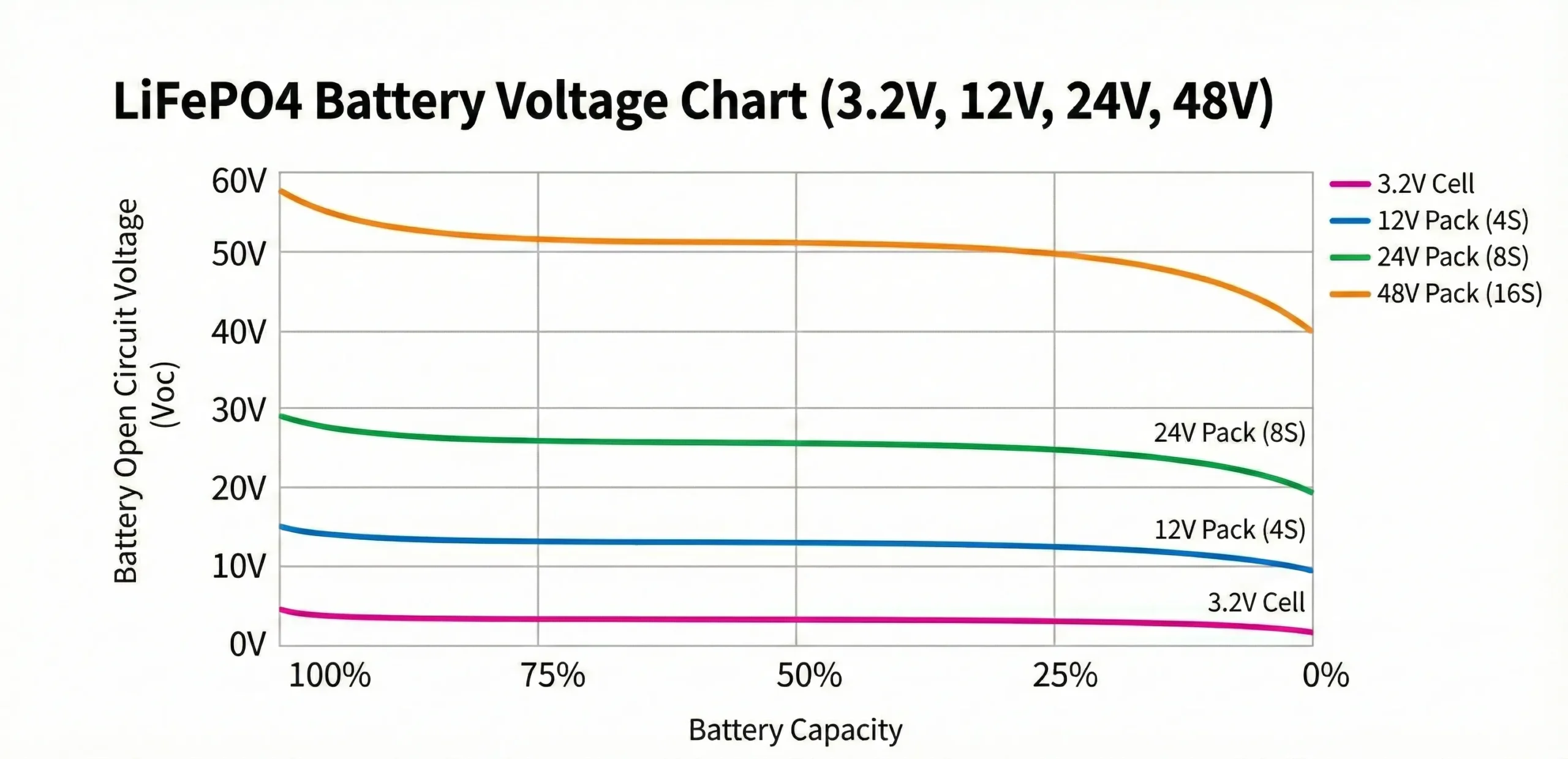
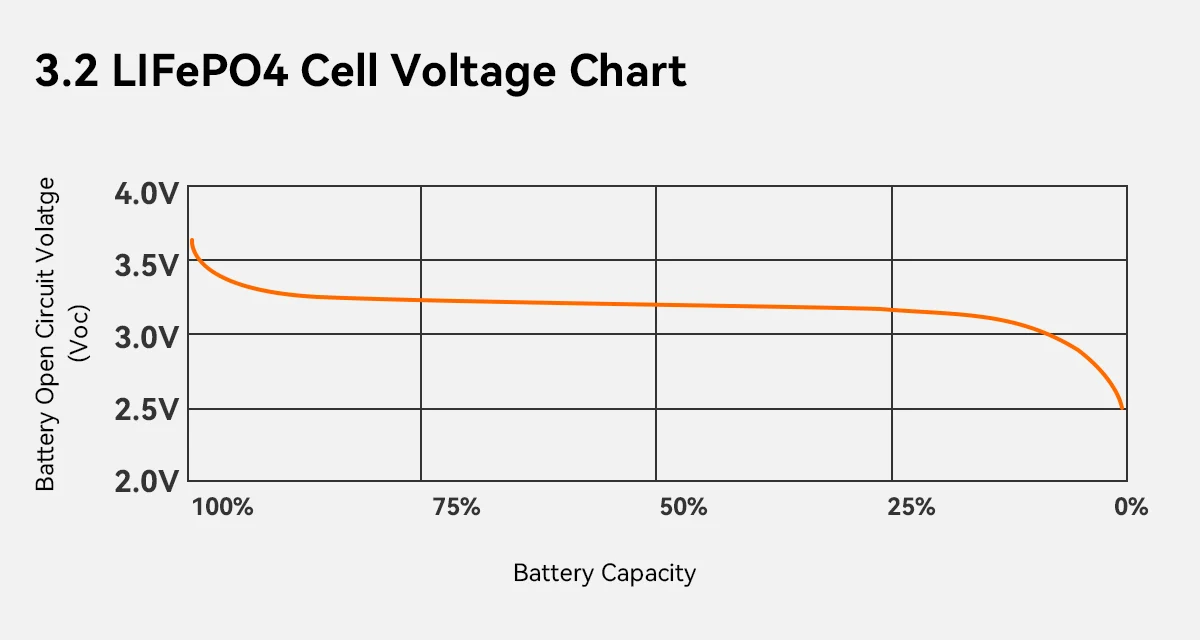
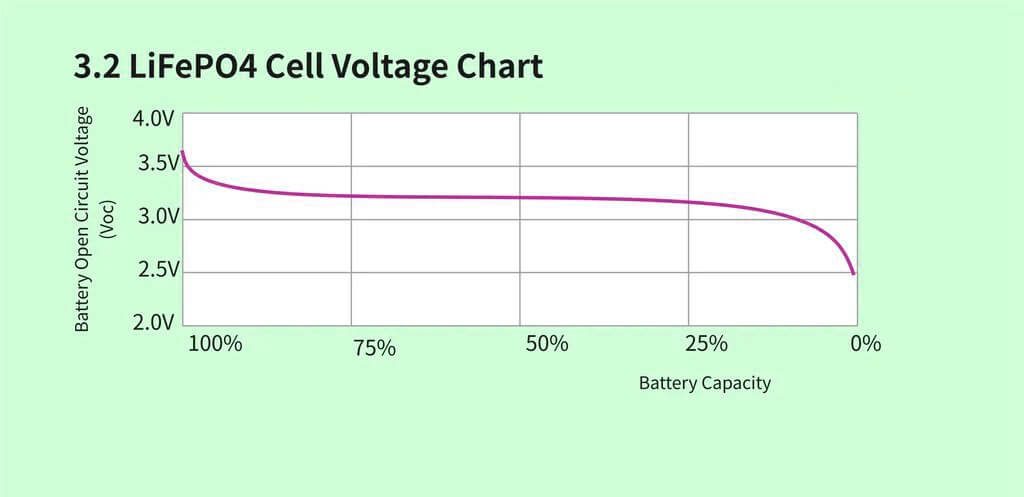
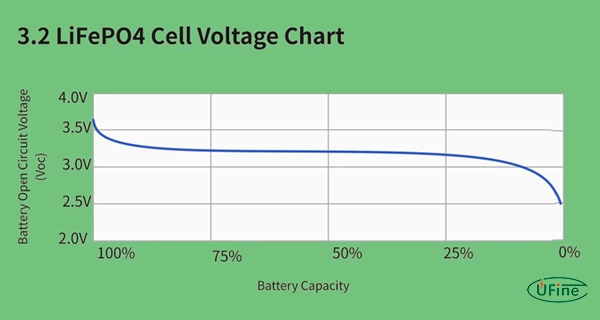
Lithium Iron Phosphate (LiFePO4) batteries are renowned for their remarkably flat discharge curve. Unlike lead-acid batteries, which show a steady voltage decline throughout their capacity, LiFePO4 maintains a consistent voltage between 3.2V and 3.3V for the vast majority of its discharge cycle. When you place a heavy load on the system—such as running an inverter at peak capacity or powering a high-torque motor—this flat profile becomes deceptively difficult to interpret.
The primary phenomenon you will witness is voltage sag. This is a temporary drop in terminal voltage caused by the internal resistance of the battery cells and the connecting cables. When the load is removed, the voltage will “bounce back” to a higher resting level. Beginners often mistake this sag for a low state-of-charge, leading them to believe the battery is empty when it may actually still hold significant energy.
Key Factors Influencing Voltage Behavior
Several variables dictate how your battery will react under stress. Temperature plays a massive role; cold environments increase internal resistance, causing more severe voltage sag even at moderate discharge rates. Furthermore, the C-rate (the speed at which you are discharging the battery relative to its capacity) determines how deep that initial dip will be.
Another common mistake is relying on cheap, surface-level voltage monitors that lack high-frequency sampling. Under heavy loads, voltage can fluctuate rapidly. If your monitoring system only checks the voltage once every few seconds, you might miss the transient dips that trigger your Battery Management System (BMS) to shut down the power prematurely, even if the total energy capacity remains sufficient for your needs.
Comparison of Voltage Behavior: Resting vs. Loaded
| State of Discharge | Resting Voltage (Per Cell) | Voltage Under 1C Load |
|---|---|---|
| 100% Capacity | 3.35V – 3.40V | 3.10V – 3.20V |
| 50% Capacity | 3.20V – 3.25V | 2.95V – 3.05V |
| 20% Capacity | 3.10V – 3.15V | 2.70V – 2.85V |
| Empty (Cutoff) | < 2.50V | < 2.20V |
Step-by-Step Guide to Evaluating Battery Health Under Load
To accurately assess your battery’s remaining capacity while dealing with high-current demands, follow these practical steps:
- Stabilize the load: Ensure the equipment drawing power is running at a constant, steady state for at least two minutes to eliminate transient electrical noise.
- Monitor the voltage drop: Observe the voltage difference between the “at-rest” state and the “under-load” state. If the drop exceeds 0.3V per cell, inspect your terminal connections and busbars for corrosion or loose bolts, as this indicates external resistance.
- Implement a pause test: If you are unsure of the remaining capacity, disconnect the load entirely and wait for five minutes. If the voltage recovers to a level significantly higher than your cutoff threshold, your battery still has usable energy.
- Verify with a shunt-based monitor: Do not rely solely on voltage. Use a Coulomb counter (shunt-based battery monitor) that tracks total amp-hours consumed, as this provides a much more accurate representation of SOC than voltage alone.
Common Pitfalls and Safety Risks
One of the most frequent errors is ignoring the role of cable sizing. If your cables are too thin for the heavy load, they will generate heat, which increases resistance and creates a voltage drop that mimics a dying battery. This is a “phantom discharge” where energy is lost as heat in the wiring rather than being consumed by the load.
Another risk involves the BMS settings. Many users set their low-voltage disconnects too conservatively. If you set your cutoff at 3.0V per cell, a heavy load will inevitably trigger a shutdown before the battery is truly drained. Understanding that LiFePO4 can safely handle transient dips toward 2.5V allows you to utilize more of your battery’s advertised capacity without harming the chemistry.
Frequently Asked Questions
Read also: How to Prevent Battery Drainage from Standby Phantom Loads
Q: Why does my battery voltage jump back up immediately after I turn off the high-power load?
A: This is known as voltage recovery or relaxation. When the load is removed, the chemical reaction inside the cell stabilizes, and the voltage drop caused by internal resistance vanishes, bringing the reading back to the true open-circuit voltage.
Q: Is it dangerous to let the voltage drop below 3.0V under a heavy load?
📷 Photo by appbattery.com
A: It is generally safe for short durations. LiFePO4 cells are designed to handle momentary dips into the 2.5V to 2.8V range under high current, provided the resting voltage remains within the healthy operating window after the load is removed.
Q: How do I know if my voltage sag is caused by a bad cell?
A: If you have a battery pack with individual cell monitoring, identify if one specific cell drops significantly lower than the others during the load. A single cell that sags much further than its neighbors is a clear indicator of an internal imbalance or a degraded cell capacity.
Final Best Practices
📷 Photo by ufinebattery.com
Always prioritize balanced charging to keep the discharge curve predictable. If your cells are unbalanced, one cell will hit the low-voltage limit long before the others, causing the entire pack to shut down prematurely. Regularly checking the voltage of individual cells during a high-load event is the only way to ensure the long-term longevity of your power system.
📷 Photo by lipowergroup.com