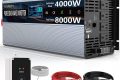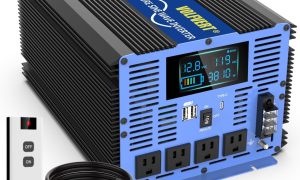


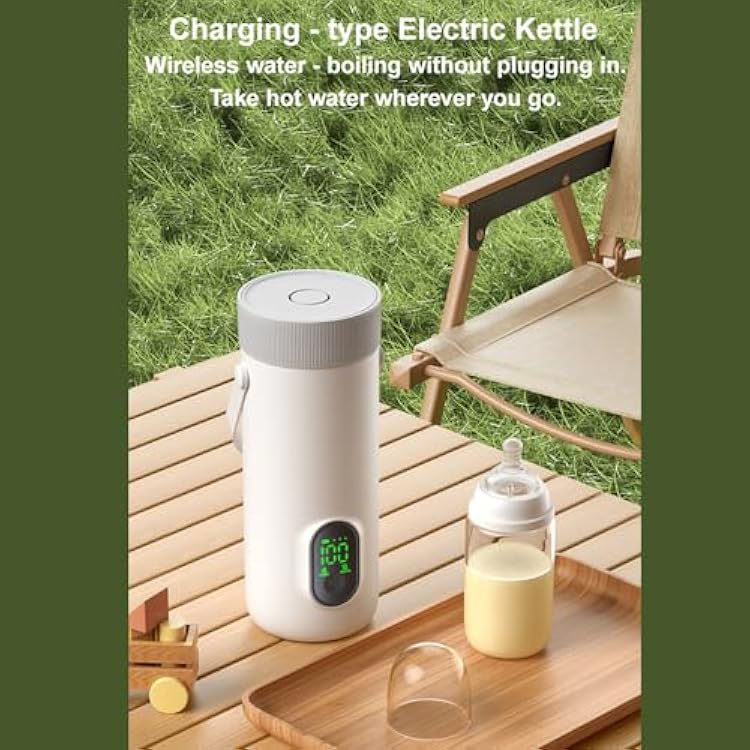
Vanonpower.com – To run a standard 1,500-watt electric kettle, you need a portable power station with at least a 2,000-watt inverter capacity and a battery storage capacity of at least 1,000 watt-hours (Wh) to ensure you can boil water multiple times without depleting the battery.
Calculating the battery size for an electric kettle is not just about the total energy capacity; it is primarily about the inverter’s surge and continuous power rating. Most household electric kettles operate between 1,200 and 1,500 watts. If your power station cannot handle this continuous load, the safety mechanism will trip immediately, leaving you with cold water and a non-functional device.
Understanding Power Consumption and Inverter Limits
The biggest mistake beginners make is looking only at the “Wh” (watt-hour) rating of a battery. While a 500Wh battery might technically have enough energy to boil a kettle, it will fail if its inverter is capped at 300 or 500 watts. Electric kettles are high-draw resistive heating appliances. They require a significant spike in energy to heat the element rapidly.
To determine if your power station is compatible, check the continuous output rating. If your kettle is rated at 1,500 watts, your inverter must be rated for at least 1,600 to 2,000 watts to account for efficiency losses and the initial surge. Furthermore, heat loss is inevitable; you should always aim for a battery capacity that is at least 30% larger than your calculated energy requirement for a single boil.
Calculating Your Energy Needs
A typical boil takes about 3 to 5 minutes. If you are boiling 1 liter of water, you are likely consuming approximately 0.1 to 0.12 kWh (100–120 watt-hours). If you have a 1,000Wh battery, you can theoretically boil water 8 to 9 times. However, in real-world conditions, inverter inefficiency and the battery’s depth of discharge limit this number.
The following table illustrates the relationship between kettle wattage, boiling time, and battery consumption per session.
| Kettle Power (Watts) | Avg. Boil Time (Minutes) | Energy per Boil (Wh) | Recommended Battery (Wh) |
|---|---|---|---|
| 1,000W | 6 Minutes | 100Wh | 500Wh+ |
| 1,500W | 4 Minutes | 100Wh | 1,000Wh+ |
| 2,000W | 3 Minutes | 100Wh | 1,500Wh+ |
Practical Steps to Safely Power Your Kettle
Operating high-wattage appliances requires careful management of your portable power setup. Follow these steps to ensure you do not damage your power station or the kettle:
- Verify the wattage rating printed on the bottom of your electric kettle to establish your baseline power requirement.
- Ensure your portable power station has a pure sine wave inverter rated for at least 20% more power than the kettle’s peak consumption.
- Place the power station on a flat, dry, and well-ventilated surface, as the inverter will generate heat during the high-draw boiling process.
- Connect the kettle directly to the AC outlet of the power station; avoid using long or thin extension cords, as they can cause voltage drops and overheating.
- Monitor the power station’s display screen during the boil to observe the real-time discharge rate and remaining battery percentage.
- Allow the power station to rest for a few minutes after the boil to let the internal cooling fans dissipate the generated heat.
Common Risks and Considerations
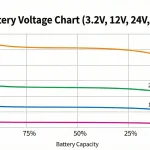
One major risk is the “Voltage Drop” phenomenon. When you draw 1,500 watts from a lithium battery, the internal resistance causes the voltage to dip. If your battery management system (BMS) is sensitive, it may trigger an “Overload” or “Low Voltage” error even if the battery is not technically empty. This is why using a higher-capacity battery is better than using a smaller one pushed to its limit.
Another factor is the environmental temperature. Lithium-ion batteries perform poorly in freezing conditions. If you are camping in the winter, your battery capacity might be effectively cut in half. Always keep your power station insulated and at room temperature whenever possible to maintain peak discharge performance.
Efficiency Tips for Off-Grid Boiling
If you find that your kettle is draining your battery too quickly, consider switching to a lower-wattage travel kettle. These are often rated at 500 to 800 watts. While they take longer to boil, they put less strain on the inverter and the battery chemistry, extending the overall lifespan of your power station.
Additionally, always boil only the exact amount of water you need. Boiling a full kettle when you only need one cup of coffee is a significant waste of stored energy. Using a thermal carafe to store boiled water can also save you from having to turn the kettle on multiple times throughout the morning.
Frequently Asked Questions
Q: Can I use a 500W power station with a 1,500W kettle?
A: No, the power station’s inverter will trip the overload protection immediately because the kettle demands more power than the unit can provide.
Q: Does the material of the kettle affect battery usage?
A: Yes, double-walled stainless steel or vacuum-insulated kettles lose less heat to the environment, meaning they reach the boiling point faster and consume slightly less energy than single-walled plastic or glass models.
Q: Is it safe to leave the kettle plugged in while the battery charges?
A: It is generally not recommended to perform “pass-through” charging with high-wattage appliances unless your specific power station model is explicitly designed to handle high-draw pass-through loads without damaging the battery cells.
By selecting a power station with adequate inverter capacity and understanding your energy consumption, you can enjoy the convenience of a hot cup of tea or coffee anywhere. Prioritize safety, monitor your discharge rates, and invest in a capacity that gives you enough buffer for multiple uses.
Read also: How to Read a LiFePO4 Discharge Curve Under Heavy Load
📷 Photo by global.ubuy.com