

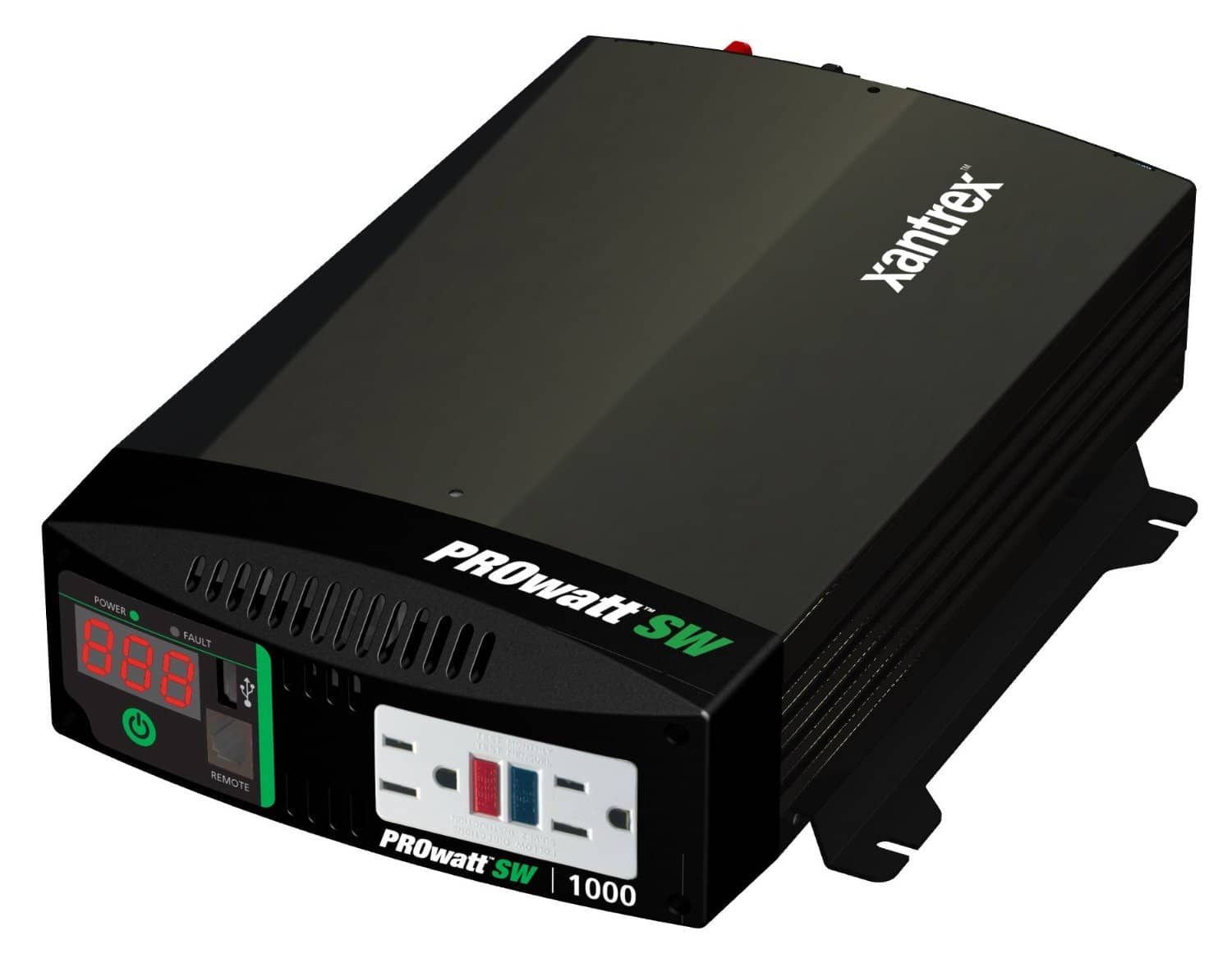
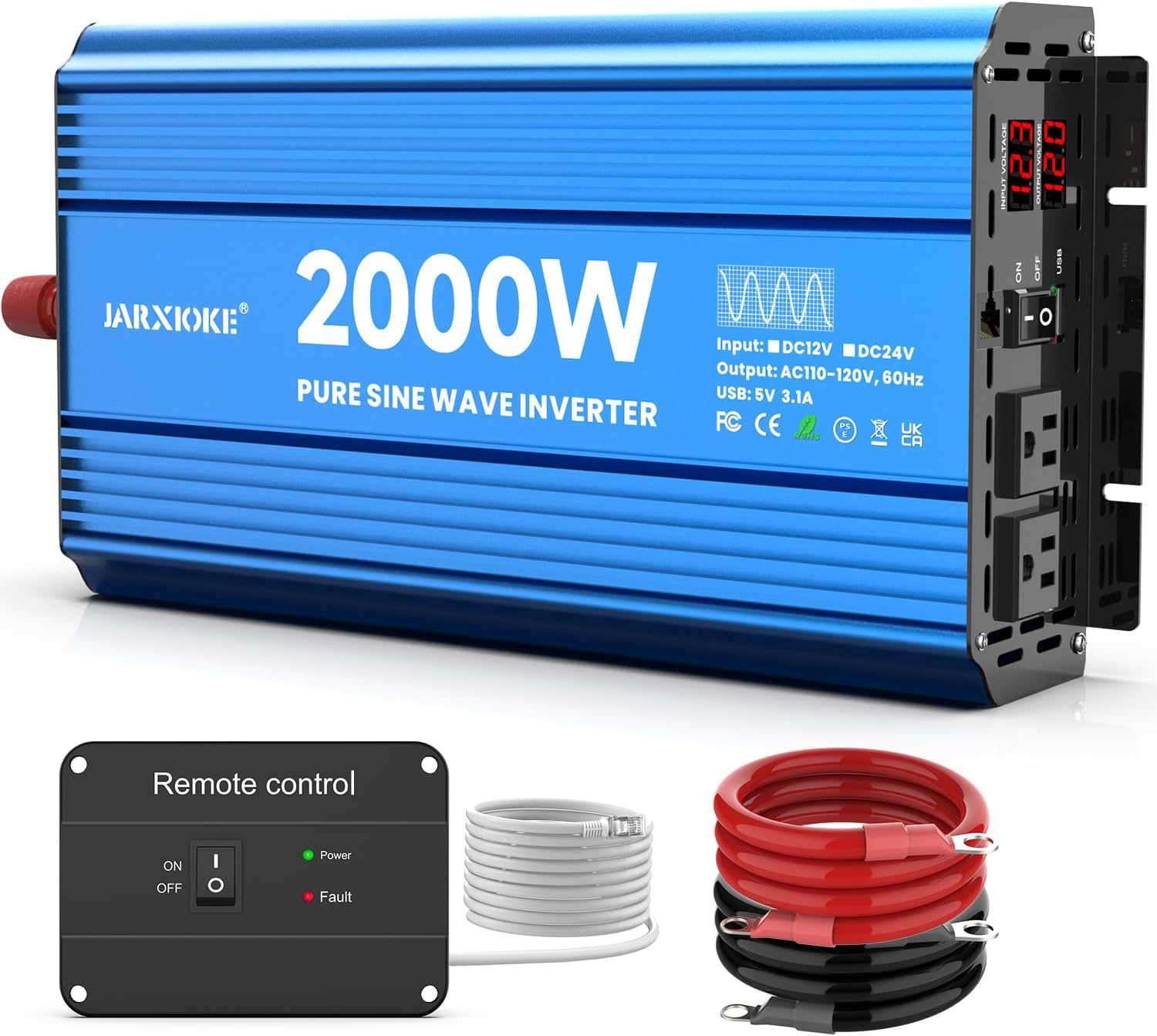
Vanonpower.com – Choosing between a 1000W and a 2000W inverter depends primarily on the total starting and running wattage of the specific appliances you intend to power simultaneously, with 1000W sufficing for basic electronics and 2000W required for high-draw items like microwaves, heaters, or power tools.
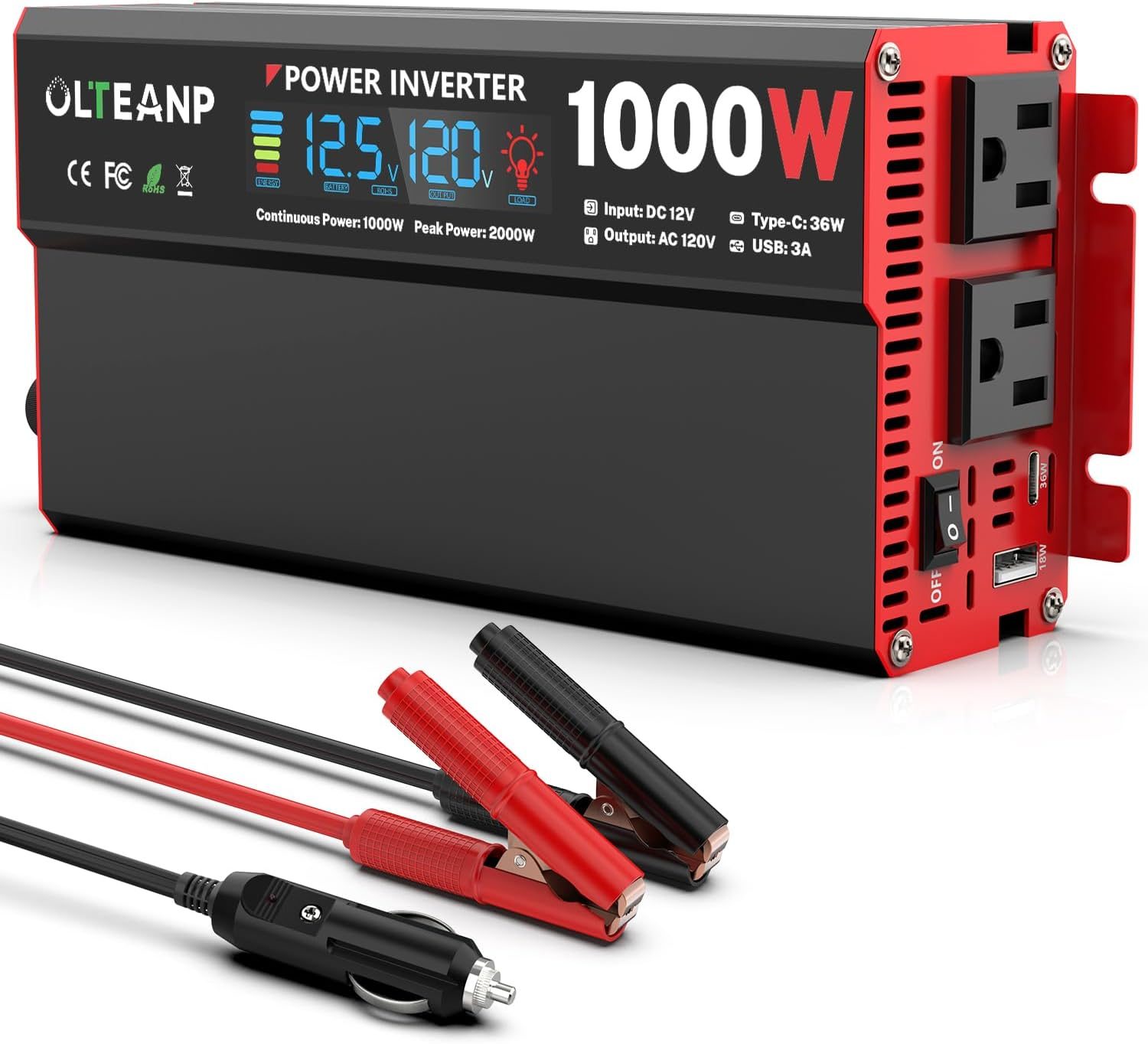
📷 Photo by amazon.com
Understanding Inverter Capacity and Load
Selecting the right inverter capacity is not just about having “more power.” It is about matching your energy source to the specific demands of your devices. A power inverter converts DC electricity from a battery into AC electricity that your household appliances can use. If you choose an inverter that is too small, it will trip or shut down due to an overload. If you choose one that is too large, you may be dealing with unnecessary weight, bulk, and potential inefficiency at low power draws.
The most common mistake users make is looking only at the “running” wattage of their devices. Most appliances, especially those with motors or compressors like refrigerators and blenders, require a “surge” or “peak” wattage to start up. This surge can be two to three times higher than the running wattage. A 1000W inverter might handle a 600W appliance easily, but if that device has a startup surge of 1200W, the inverter will likely trigger its protection circuit and cut power immediately.
Comparing 1000W and 2000W Inverters
The following table provides a clear comparison of what these two capacities can typically handle in a real-world scenario. Use this as a baseline for your energy planning.
| Appliance Type | 1000W Inverter Capability | 2000W Inverter Capability |
|---|---|---|
| Laptop/Phone Charger | Excellent (Multiple units) | Excellent (High capacity) |
| LED Lighting | Excellent | Excellent |
| Small Refrigerator | Possible (Check surge) | Highly Recommended |
| Coffee Maker | Not Recommended | Recommended |
| Microwave Oven | No | Recommended (1000W-1200W models) |
| Power Tools (Drills) | Small tools only | Most standard tools |
How to Calculate Your Power Requirements
Before purchasing, you must conduct a simple audit of your power needs. Follow these steps to determine the correct capacity for your specific lifestyle or emergency backup system.
- List every appliance you plan to plug into the inverter simultaneously.
- Find the “Rated” or “Running” wattage on the label of each device (usually measured in Watts or W).
- Identify the “Surge” or “Peak” wattage for each device, which is often found in the user manual or online specifications.
- Add the running watts of all devices together to get your total continuous load.
- Identify the single device with the highest startup surge and ensure your inverter’s surge rating covers that specific number.
- Add a 20% safety buffer to your total continuous load to ensure the inverter operates at optimal efficiency without overheating.
The Risks of Under-sizing and Over-sizing
Under-sizing is the most common cause of inverter failure. When an inverter is pushed to its absolute limit for extended periods, the internal components generate excessive heat. This leads to thermal shutdown, degraded battery life, and eventually, permanent damage to the inverter’s MOSFETs. If you find yourself constantly resetting your inverter, it is a clear sign that your capacity is too low for your usage habits.
On the other hand, over-sizing can be counter-productive. Large inverters have a higher “idle current draw,” meaning they consume more power just to stay on, even if nothing is plugged into them. If you are using a solar setup with limited battery capacity, an oversized 2000W inverter might drain your batteries significantly faster than a 1000W unit would, simply because of the overhead required to maintain the larger internal circuitry.
Practical Tips for Long-Term Reliability
Reliability is not just about the wattage rating; it is also about the build quality and the type of waveform. Always prioritize “Pure Sine Wave” inverters over “Modified Sine Wave” inverters. While modified sine wave units are cheaper, they can damage sensitive electronics like medical equipment, high-end laptops, and audio gear. A pure sine wave inverter provides clean, consistent power that mimics the electricity from your wall outlet.
Furthermore, consider your cable length and thickness. A 2000W inverter pulls double the current of a 1000W inverter from the battery bank. If you use thin cables, you will experience a significant voltage drop, causing the inverter to alarm or shut down even when the battery is technically charged. Use the thickest cables recommended by the manufacturer to ensure the power can reach the inverter efficiently.
Common Mistakes to Avoid
One frequent error is assuming that you can run a 2000W device on a 1000W inverter just because you are only using it for a “short time.” Inverters are not designed to be overloaded, even briefly. Another mistake is ignoring the battery bank size. A 2000W inverter is useless if you only have a small 50Ah battery, as the high current draw will deplete the battery in minutes, potentially damaging the battery chemistry in the process.
Always verify the ambient temperature of your installation area. Inverters lose efficiency as they get hotter. If you install a 1000W inverter in a cramped, unventilated box, it may only be able to output 700W before hitting a thermal limit. Keep your equipment in a dry, ventilated space, and you will significantly extend the lifespan of your investment.
Frequently Asked Questions
Q: Can I use a 2000W inverter if my appliances only need 500W?
📷 Photo by wonderfulengineering.com
A: Yes, you can. The inverter will only draw as much power as the connected appliances demand. However, keep in mind that the inverter will consume slightly more power just to stay powered on (idle consumption) compared to a smaller unit.
Q: What happens if I exceed the 1000W limit on a 1000W inverter?
A: Most modern inverters have built-in overload protection. They will either shut down immediately to prevent fire or damage, or they will output a warning alarm. Continued overloading will eventually lead to permanent hardware failure.
Q: Is it better to buy one 2000W inverter or two 1000W inverters?
📷 Photo by amazon.com
A: Generally, one 2000W inverter is better. It is more efficient, easier to wire, and easier to monitor. Using two separate systems adds unnecessary complexity to your wiring and battery management.
📷 Photo by ebay.co.uk